Chochocouane: A Story of Contrast
7 days on La Grande Boucle Chochocouane — Circuit No. 63, SÉPAQ La Vérendrye Wildlife Reserve
I walked in front of the car at times, scouting the best route forward. Honda Civics — legendary vehicles, but not the best for old logging roads.
We were running on only a few hours of sleep. We had left Montreal in the early hours and driven seven hours north to La Vérendrye Wildlife Reserve.
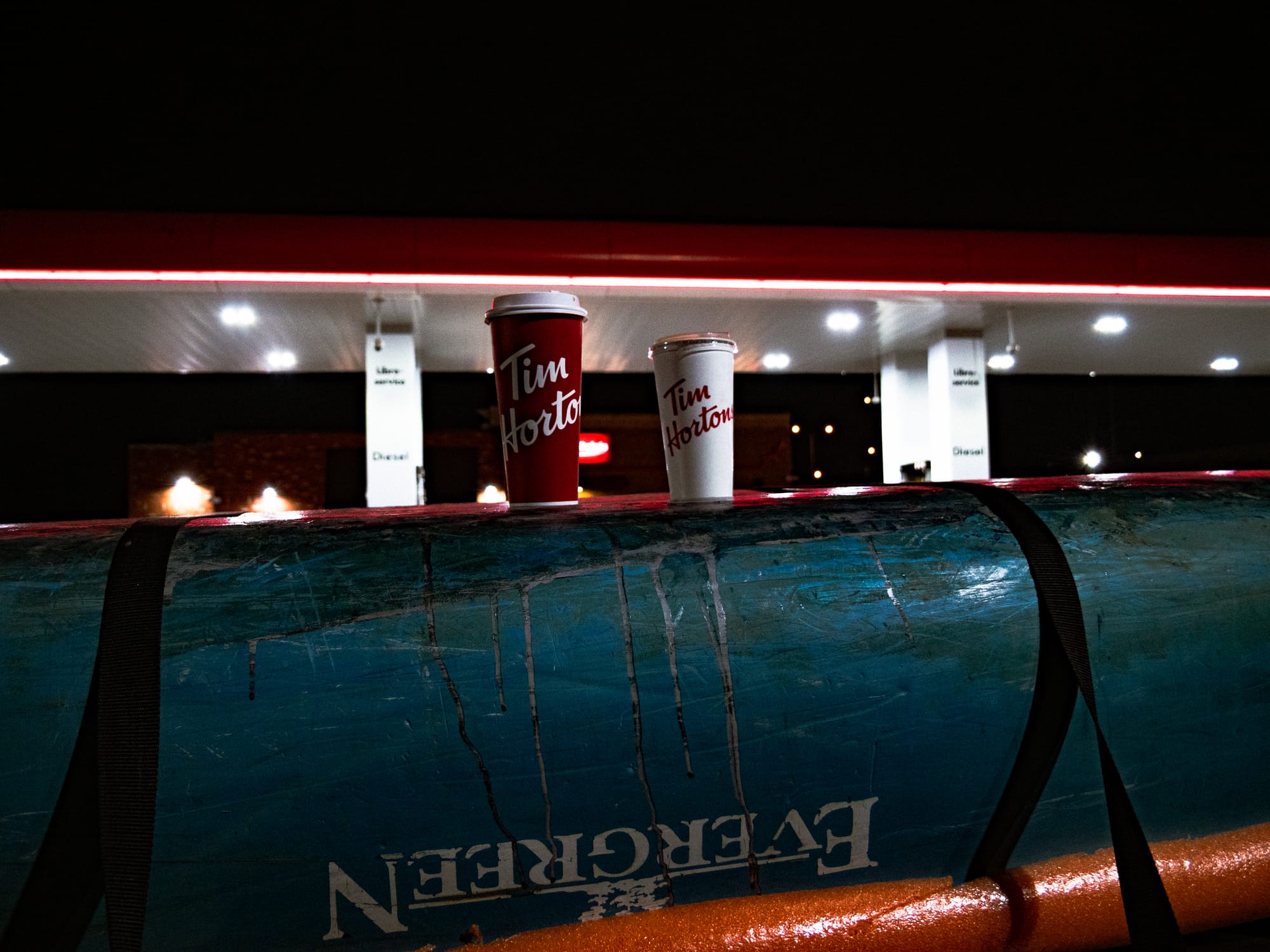
This was my first real self-guided "expedition." I had done smaller trips, but this was a week, and 138 km. Small in comparison to what seasoned trippers accomplish, and the route was well travelled, but I wasn't yet... a seasoned tripper!
The joys of learning.
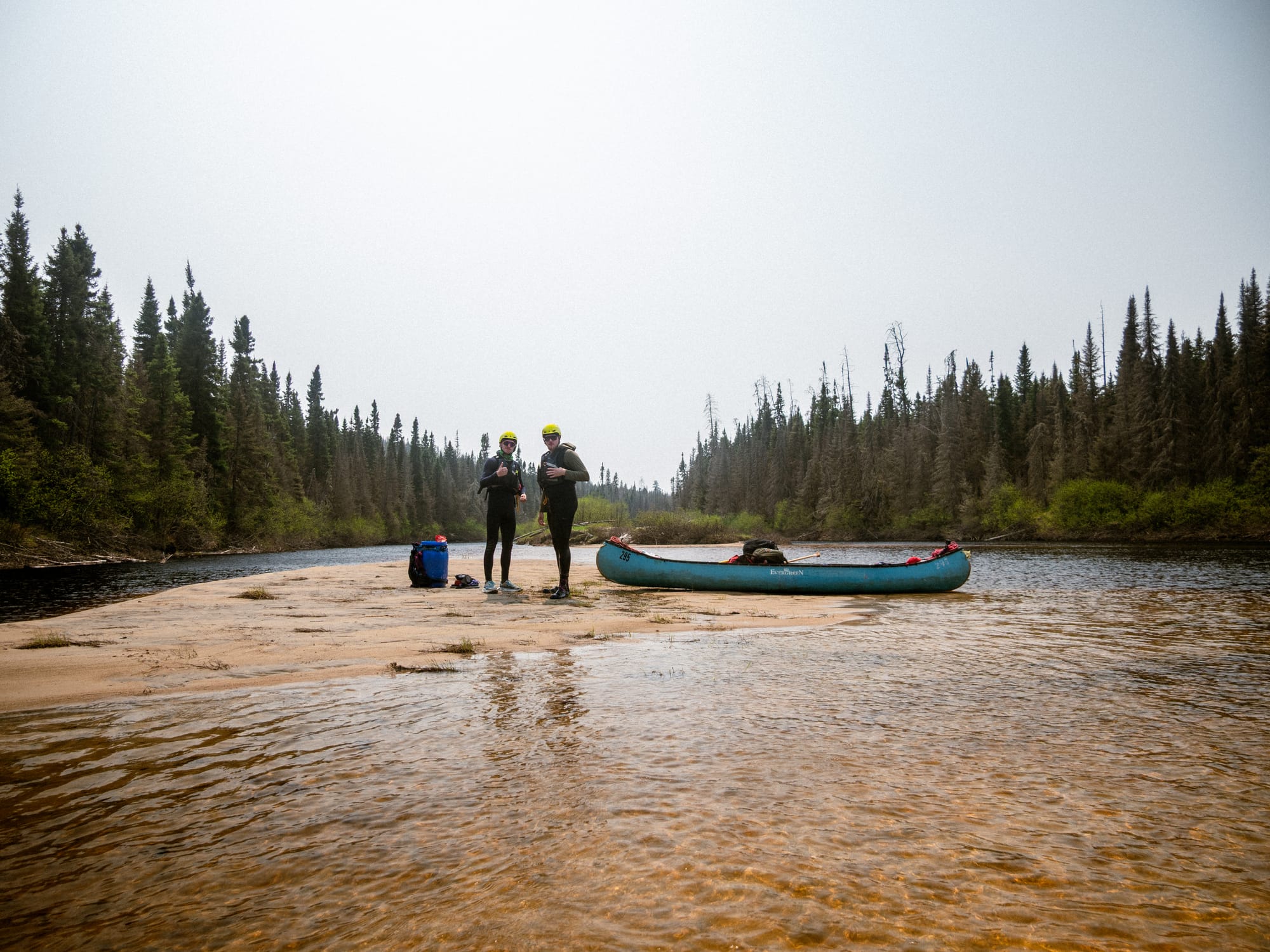
We jumped into our wetsuits and started travelling upstream, soon encountering shallow rapids that required wading. The water was still quite cold in Abitibi on May 31st.
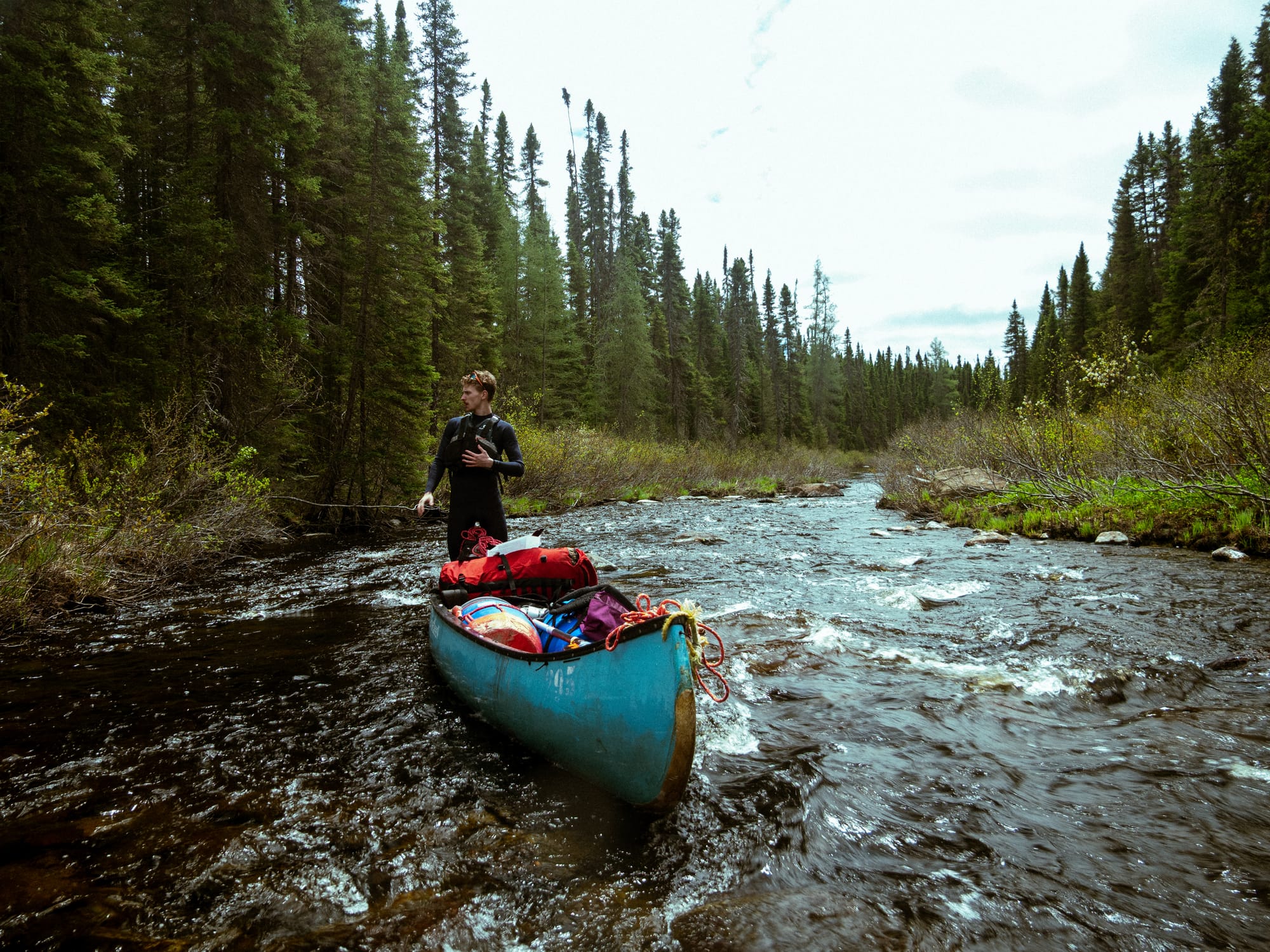
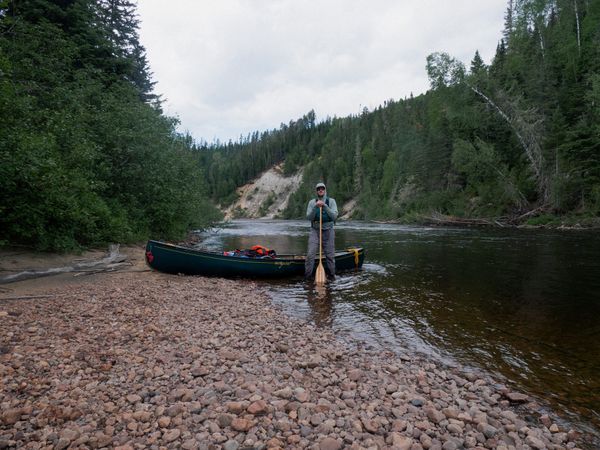
We walked beside my old Royalex Evergreen Prowler canoe. It was absolutely beat up, and patched... everywhere. Probably no longer fit for this type of wilderness trip, but here we were.
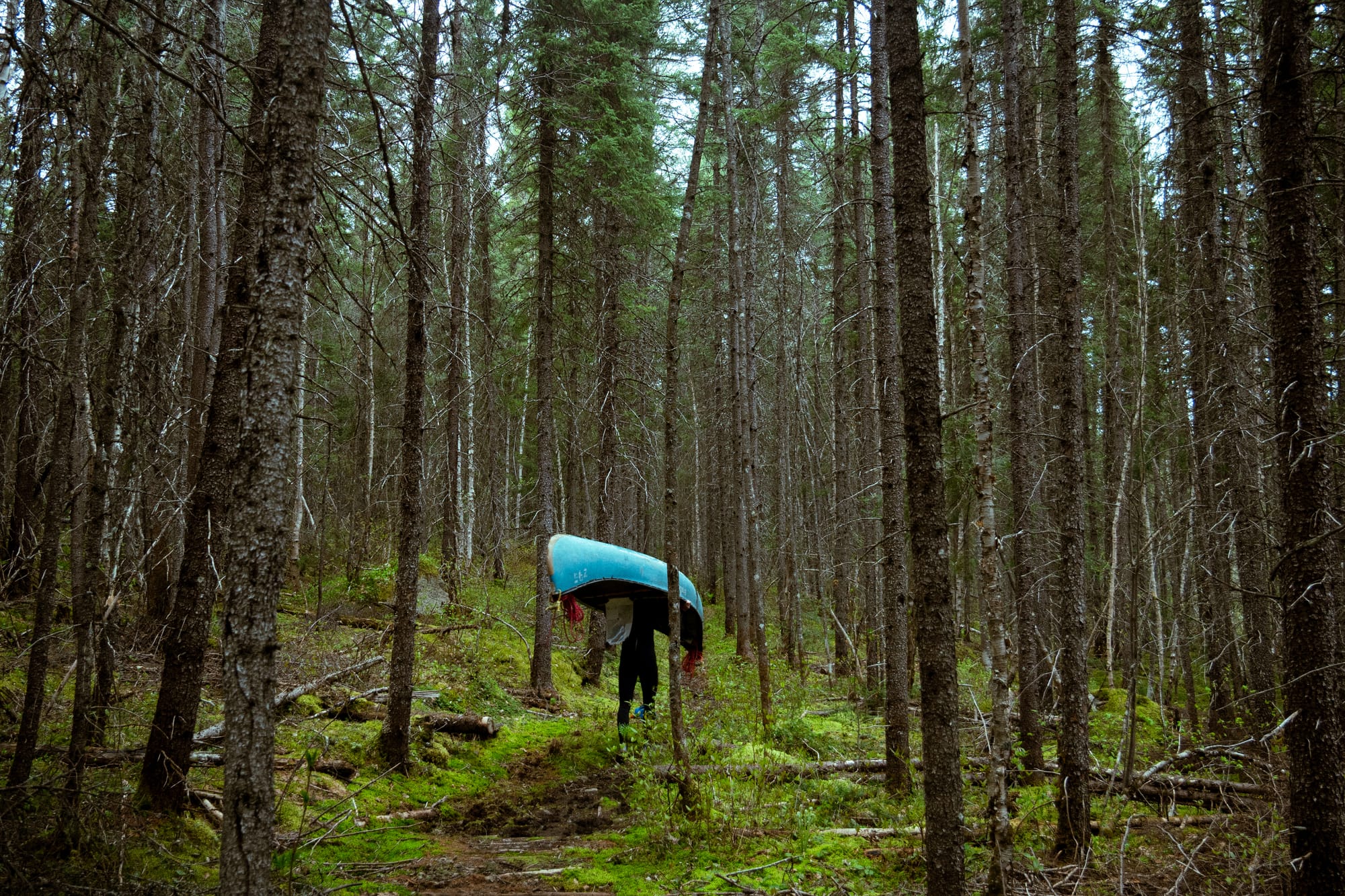
This was the route known as La Grande Boucle Chochocouane — a route combining upstream travel, lakes both large and small, and a few days down the Chochocouane, a whitewater river nestled in the southern boreal forest.
After grinding through rain, headwinds, and a few portages, we landed the boat to start an 800 m portage.
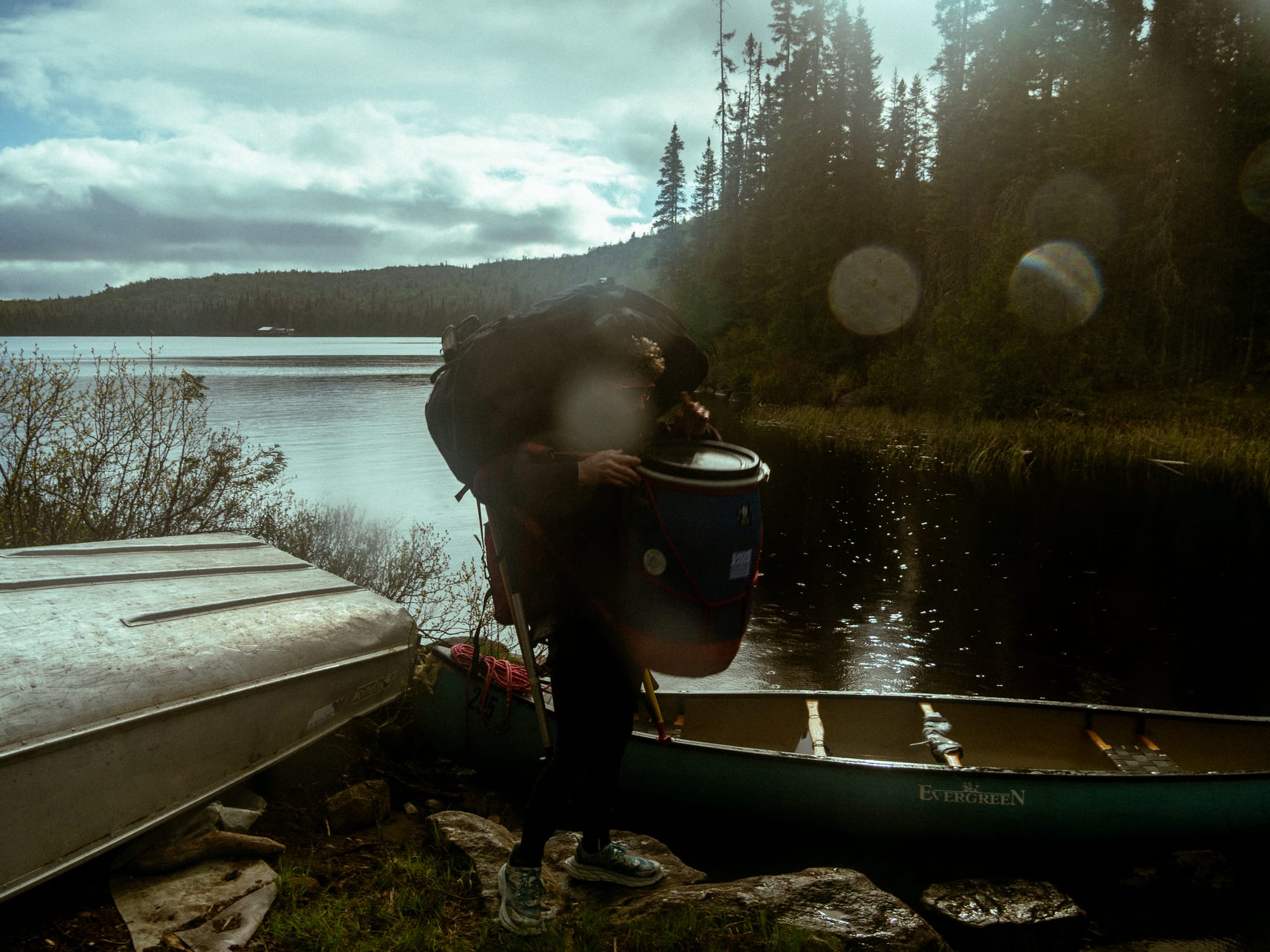
I sunk to my thighs in mud. This was definitely shaping up to be an adventure.
With darkness near, the only thing to do was press forward. We arrived at camp tired, the woods wet, and I figured we would likely make our supper on the isobutane stove. But... I looked around and spotted all the necessary ingredients to quickly whip up a fire!
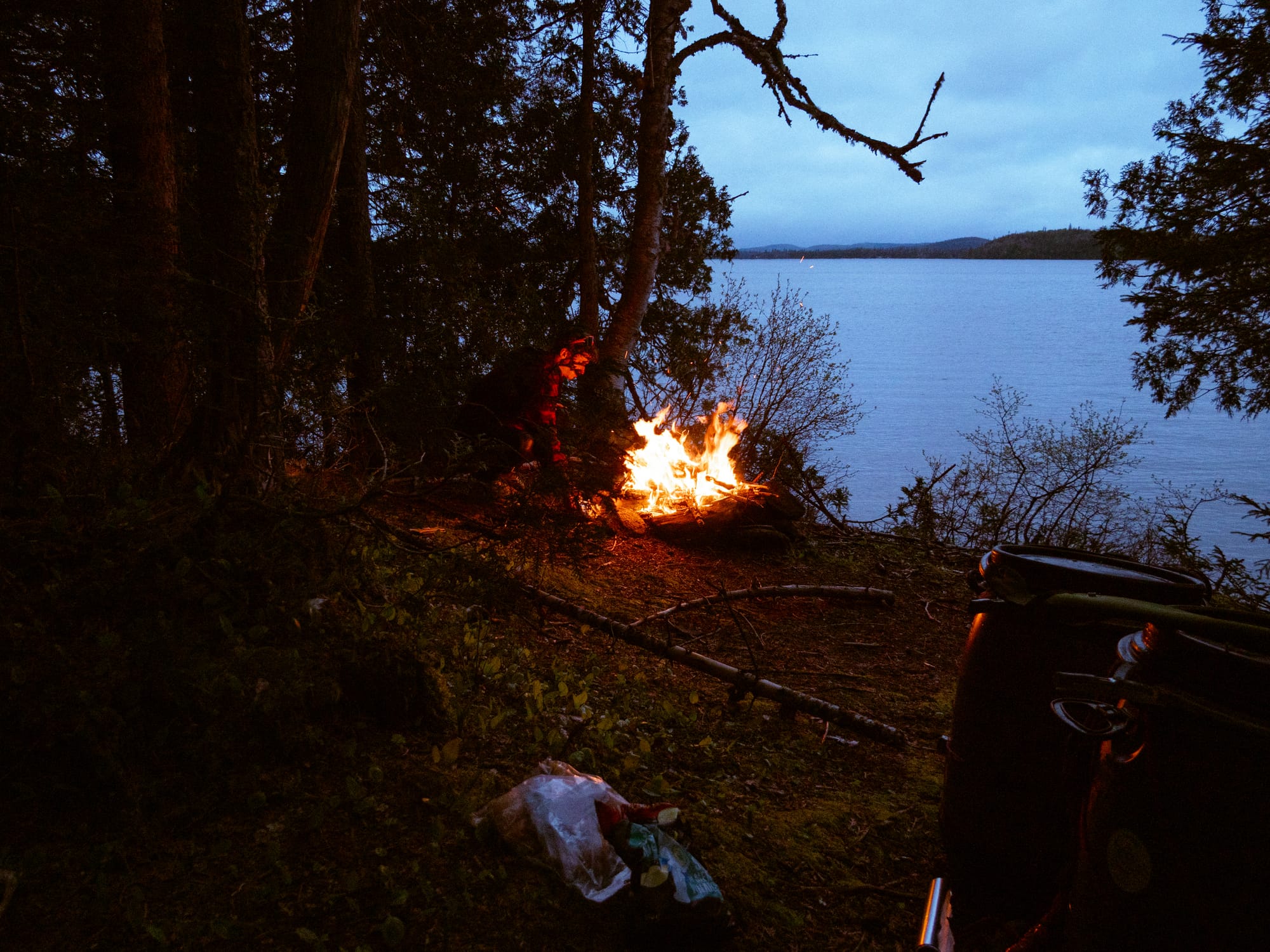
Before long, the tent was set up, and we had the massive morale boost of bacon-infused, fire-cooked burgers.
What was becoming quickly evident on this trip was that nature has wild moments of contrast. Stepping outside the comfort of modern life, you get a closer look at the true fibres of life. One moment you are slogging through mud, the next you are enjoying fire, good company, and the beauty of the backcountry.
This was only the first time we would learn this lesson on this trip. There was more to come.
The following morning, we paddled into a misty lake.
Things were chilly — often single digits, rain, headwinds... even a brief bout with hail. We pressed on, looking forward to the portages to warm up.
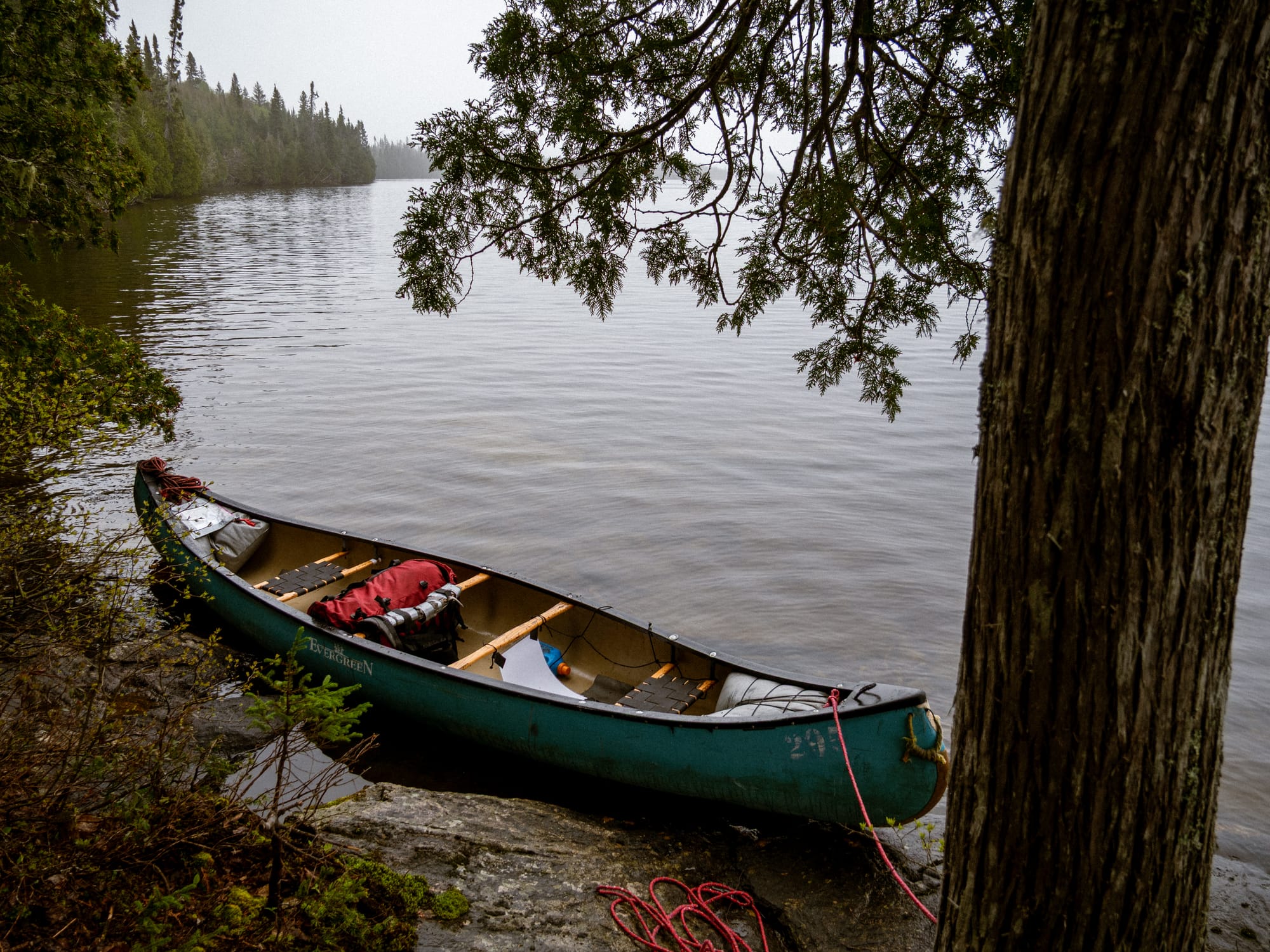
This was June 1st, but we were glad we had brought the wetsuits that kept us somewhat warm in the Abitibi spring.
The goal was to access the Chochocouane River — travelling north through lakes, then connecting into a tributary, and finally floating the river south for a few days. We would get to paddle the lion's share of the river without needing a shuttle.
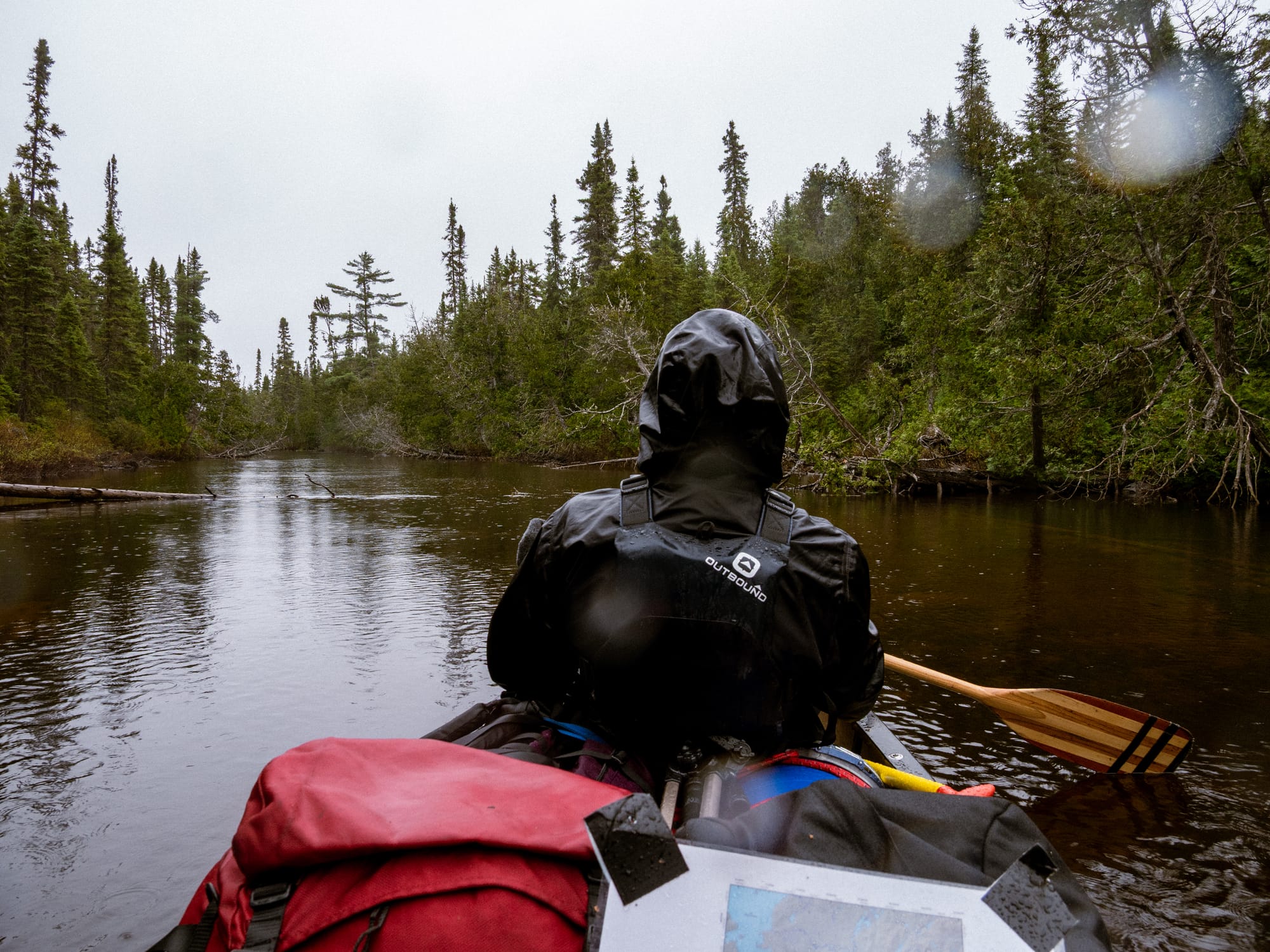
I prayed for a sunset on the beach. This seemed like a far cry away. I had intel we might be able to make it to a beach camp if we pushed hard, but wasn't even sure I had pinpointed the right spot on the map.
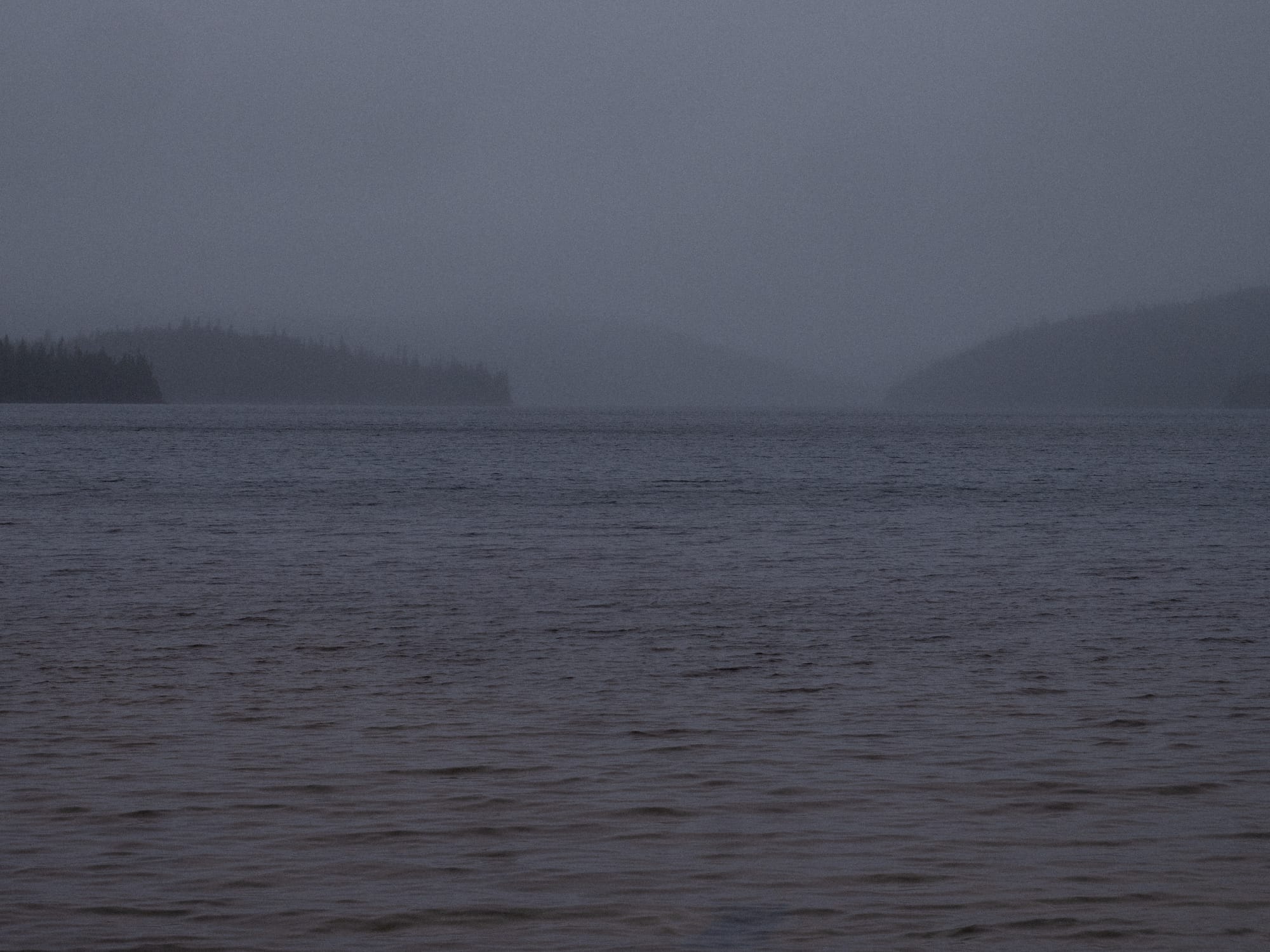
Twenty-eight kilometres later, we arrived at the beach site.
The rain had cleared.
We cooked up steaks with potatoes in rosemary butter, and enjoyed a sunset.
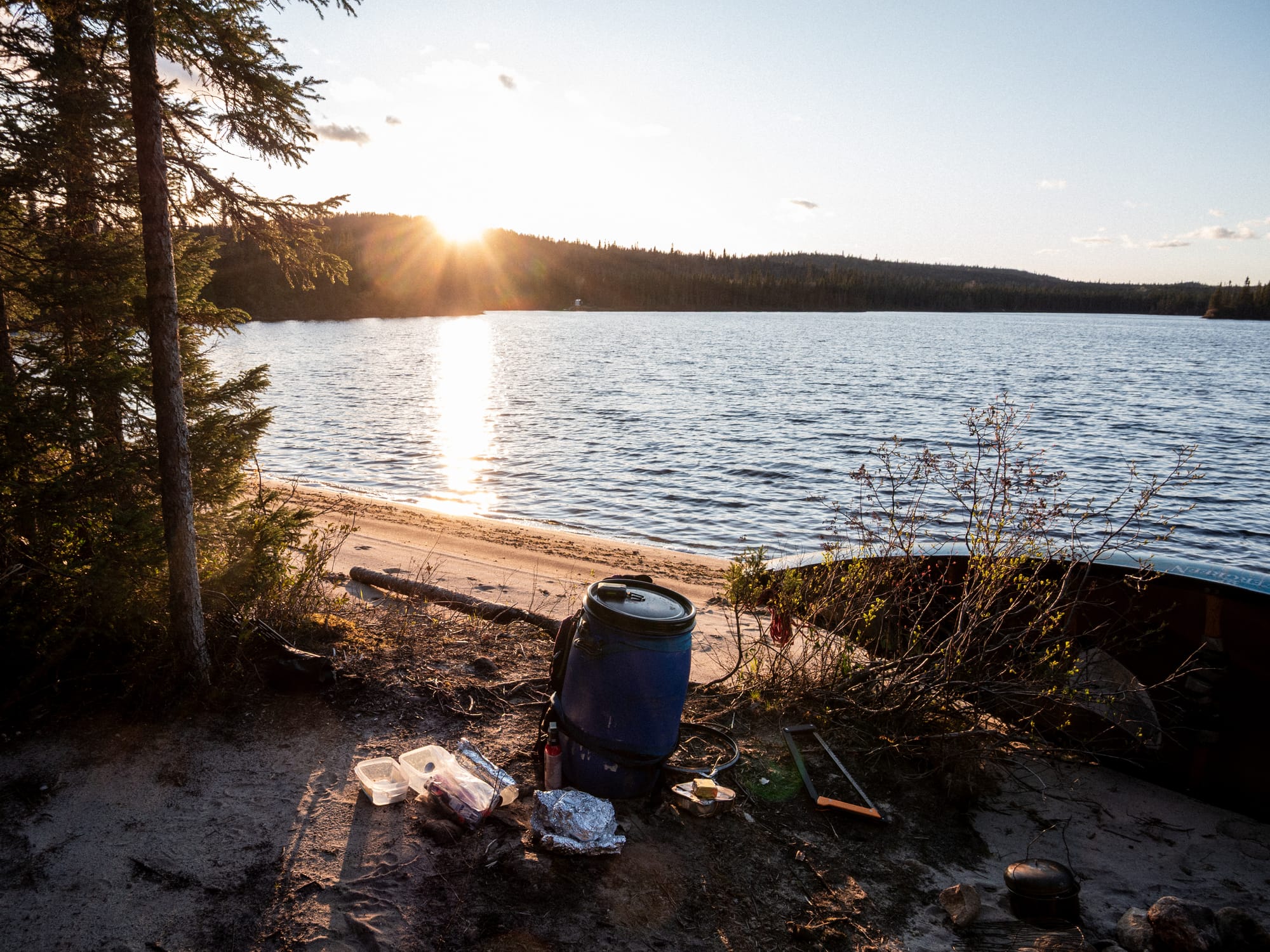
Again, this journey to the Chochocouane reinforced the lesson of contrast in nature. Sometimes you are cold on an exposed lake, sometimes you get to soak in the beauty of it all with a steak dinner.
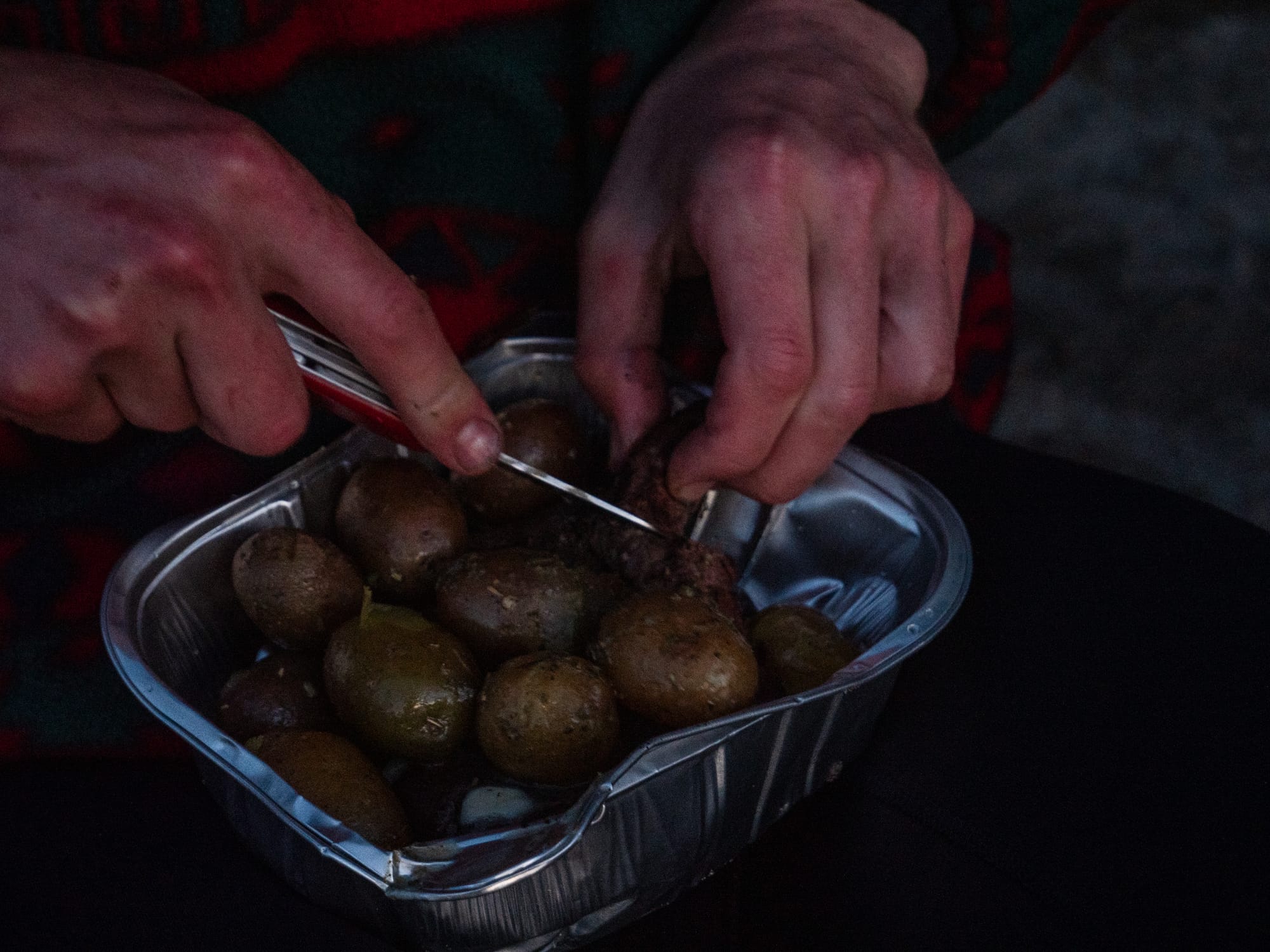
The following morning, we portaged around a small chute leading us into a small tributary of the Chochocouane River. The creek was shallow in places. It was our final small test before getting to experience la pièce de résistance of the route.
The sun was finally out, and now it was time to go downstream.
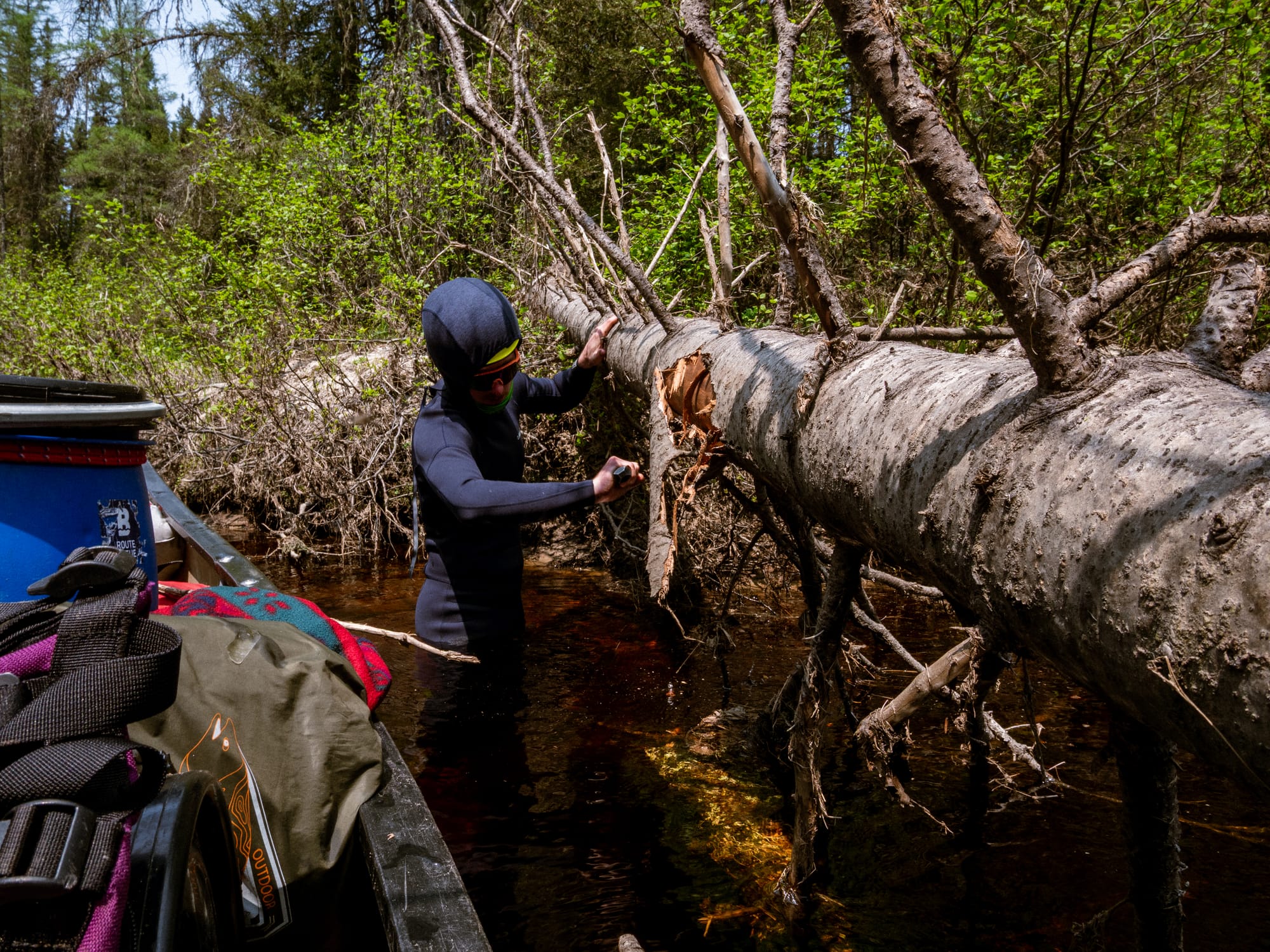
Some wading, running one or two small rapids, and a brief bout with a hatchet to clear the way, we soon linked into the main river.
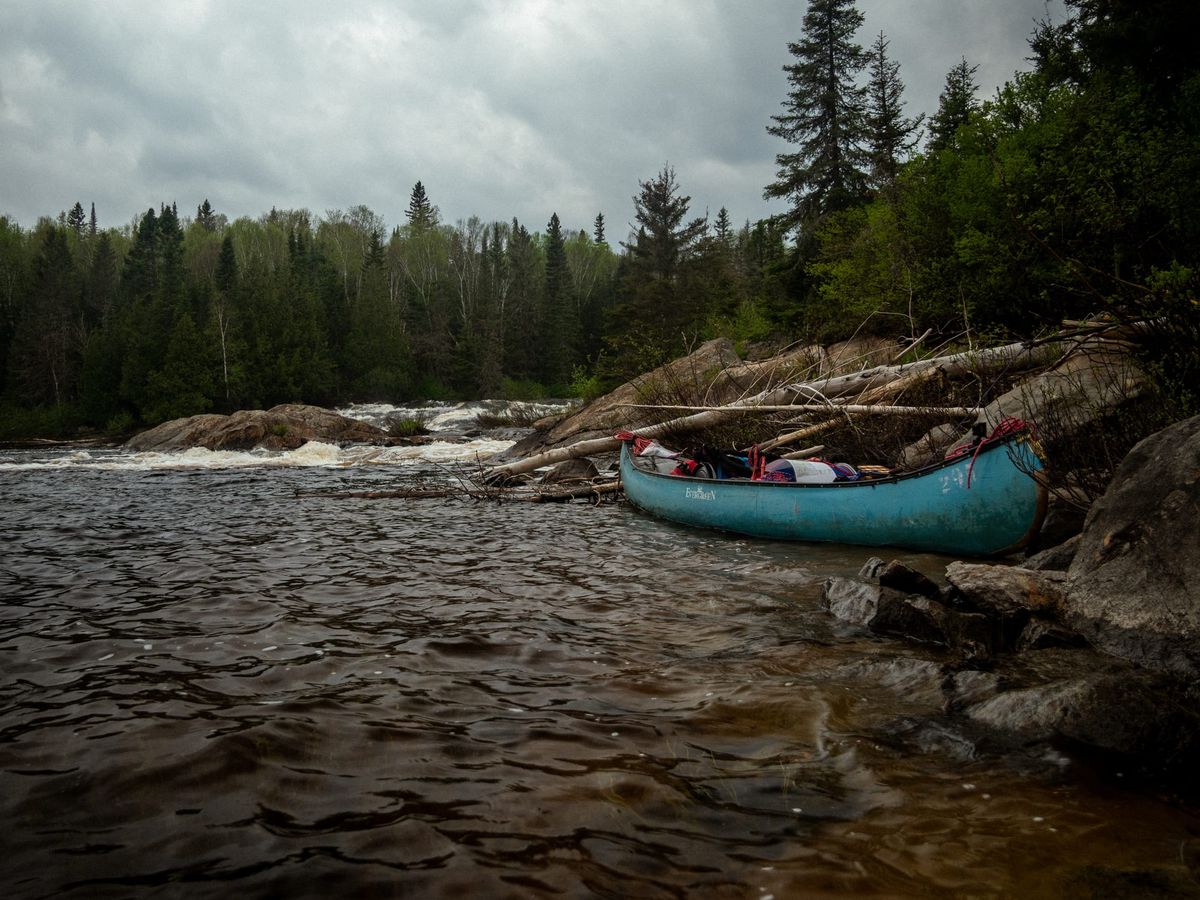
At this time, I was still a relatively inexperienced whitewater paddler. I knew how to catch an eddy and had learned the basic strokes, but the remoteness and skill level demanded a prudent approach when facing rapids. We portaged our old Evergreen canoe, outfitted with bow and stern flotation, and gear when necessary.
It was wonderful to paddle the rapids on the wide Chochocouane! The experience stood in contrast to our first two days slogging through cold, wind, and rain.
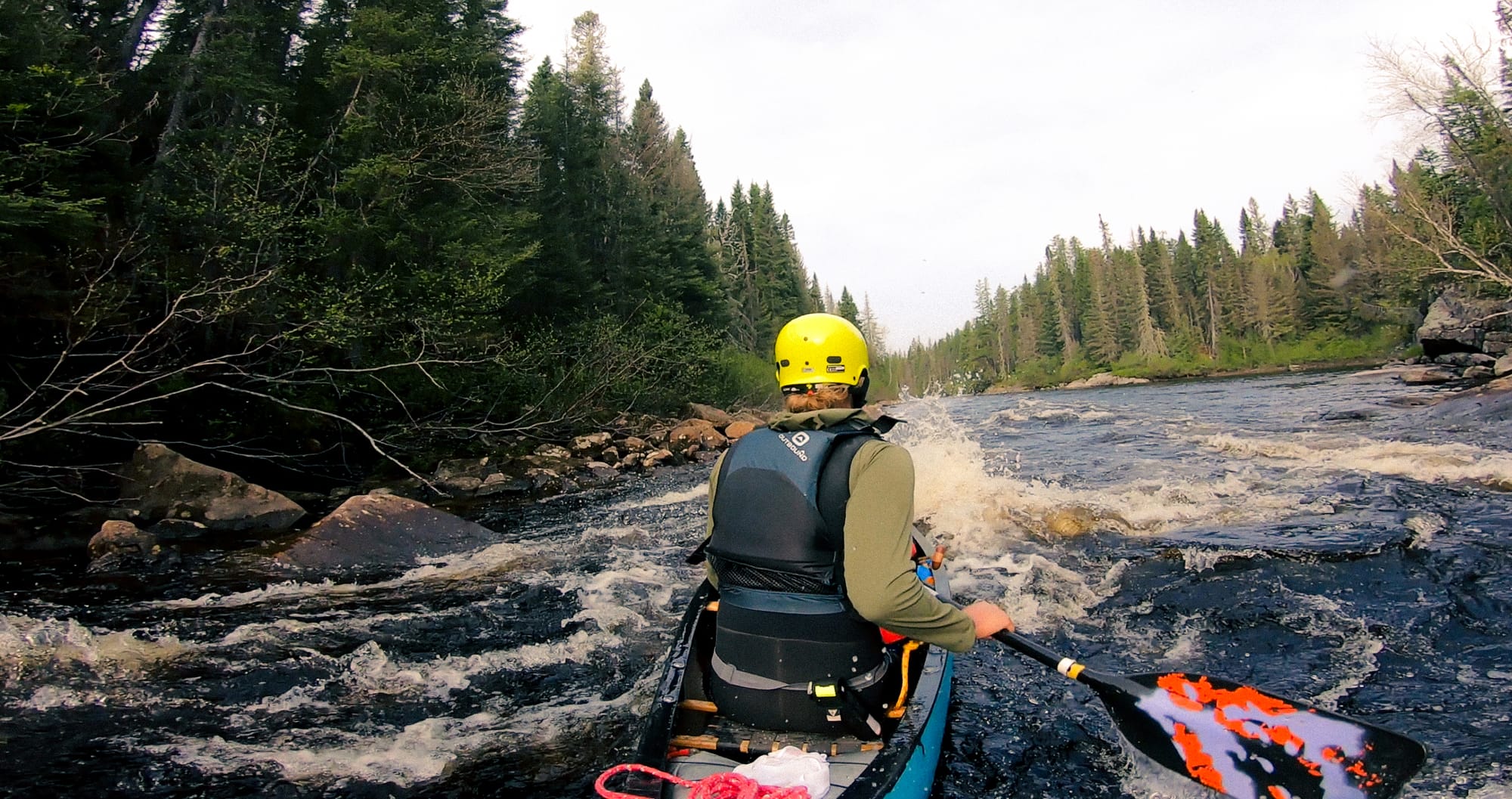
We made quick work and stopped at an incredible camp nestled beside a larger rapid.
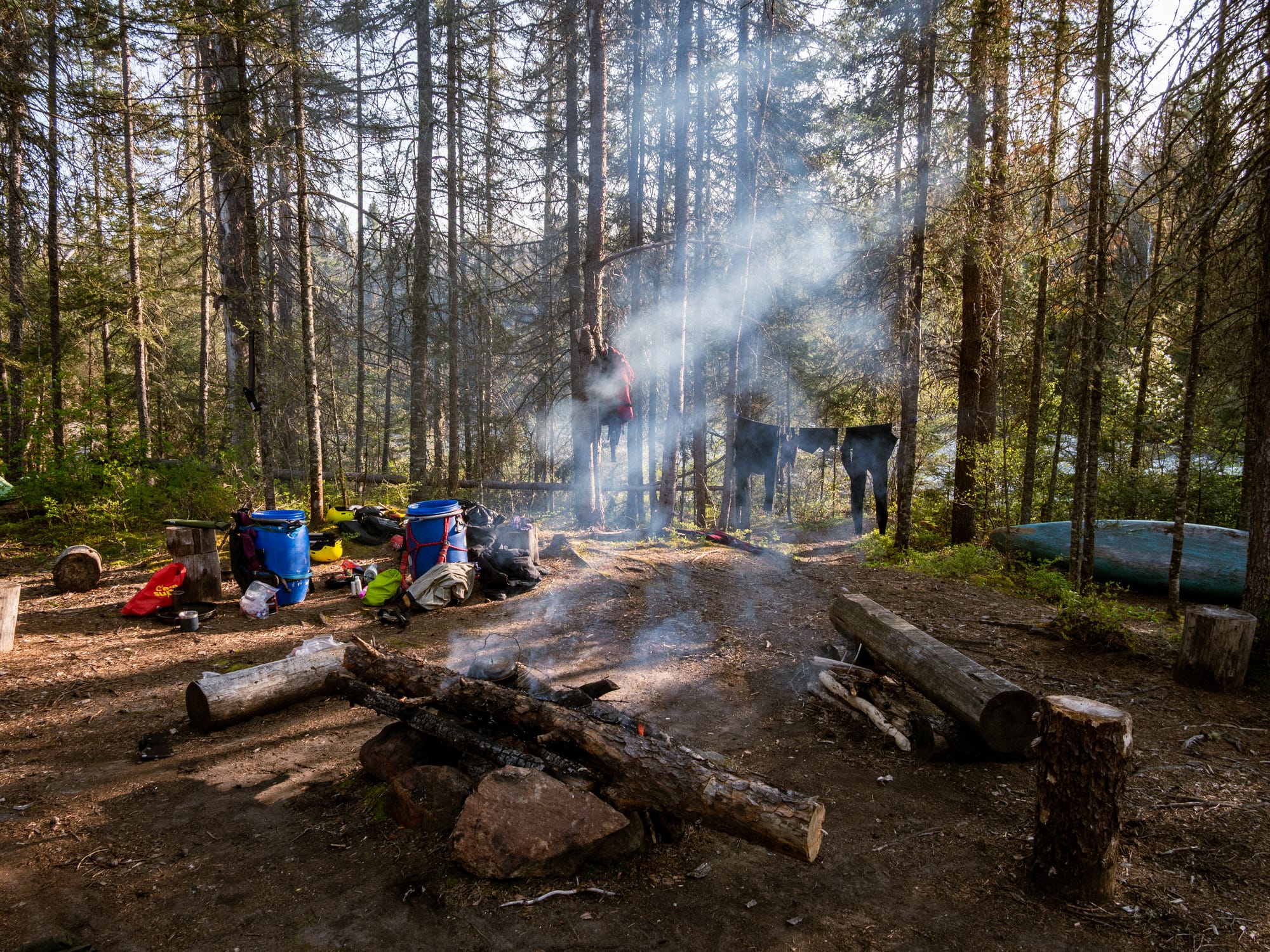
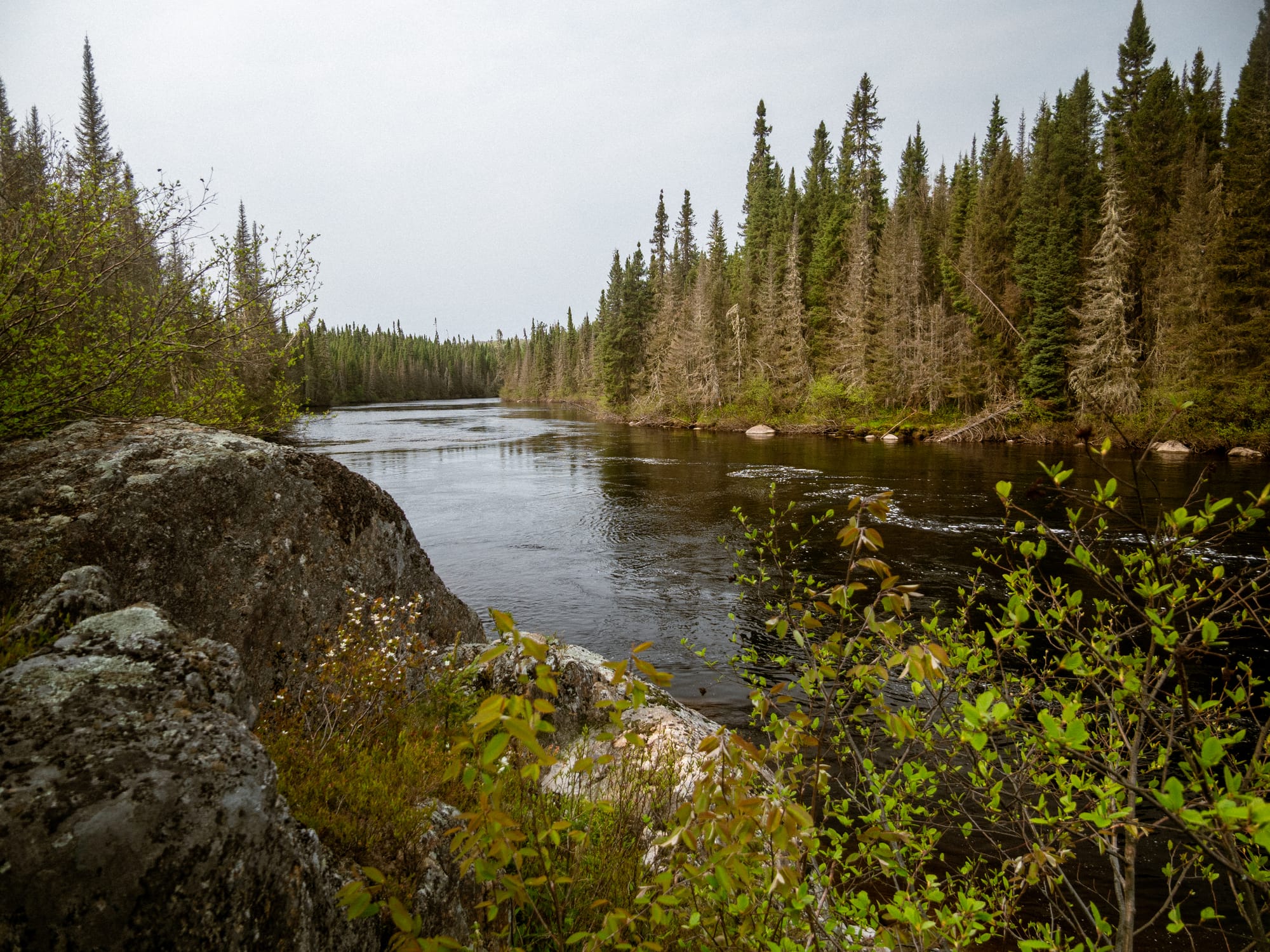
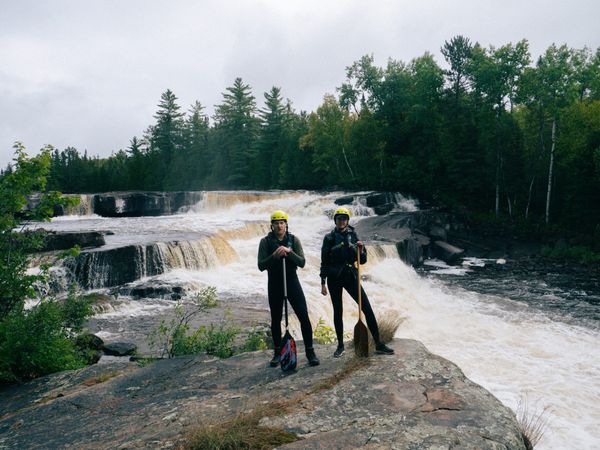
We spent three nights on the Chochocouane, scouting, lining, portaging, and running its rapids. We enjoyed the boreal splendour, including a waterfall. The long flatwater sections between rapids let us soak it all in.
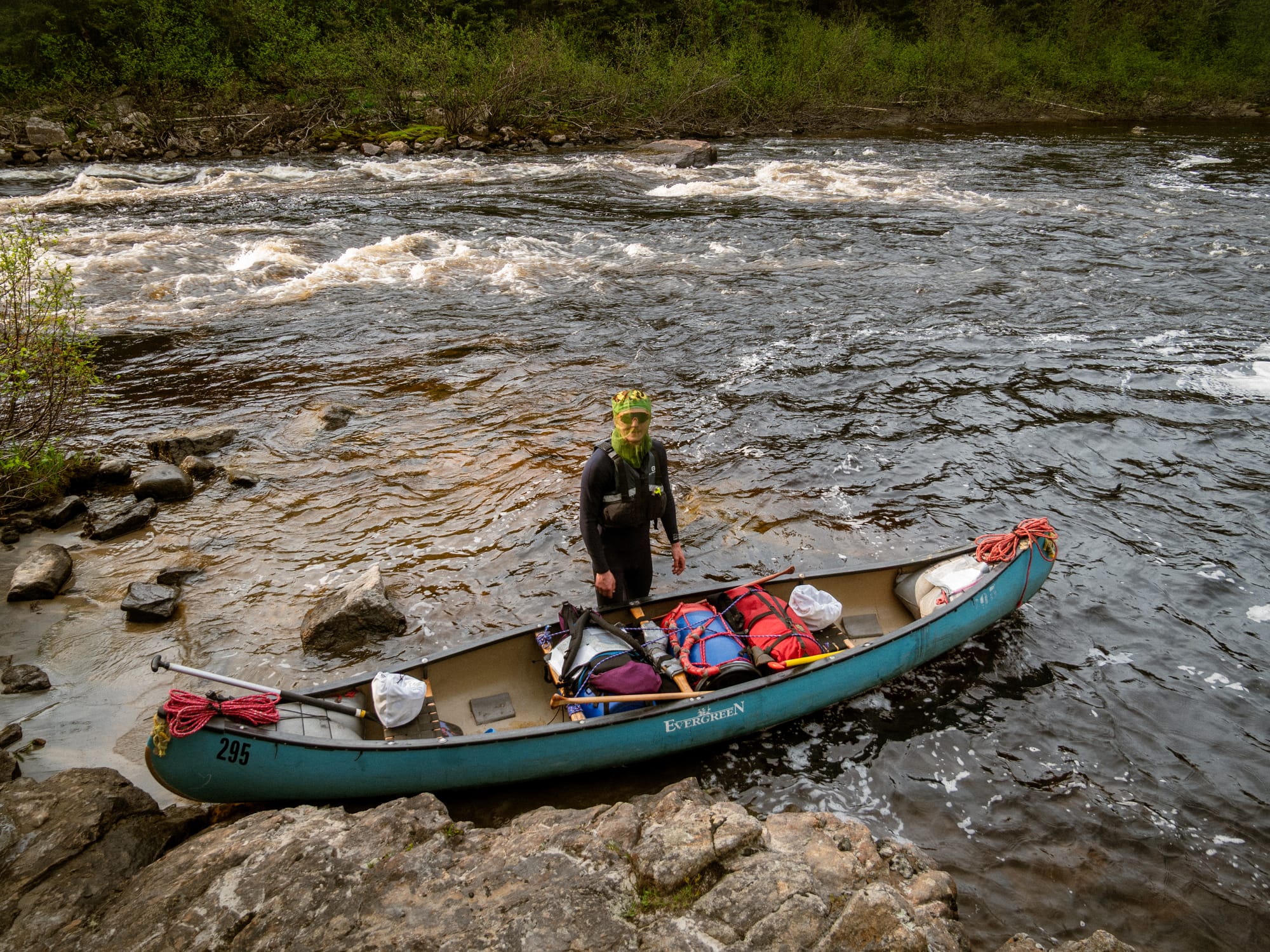
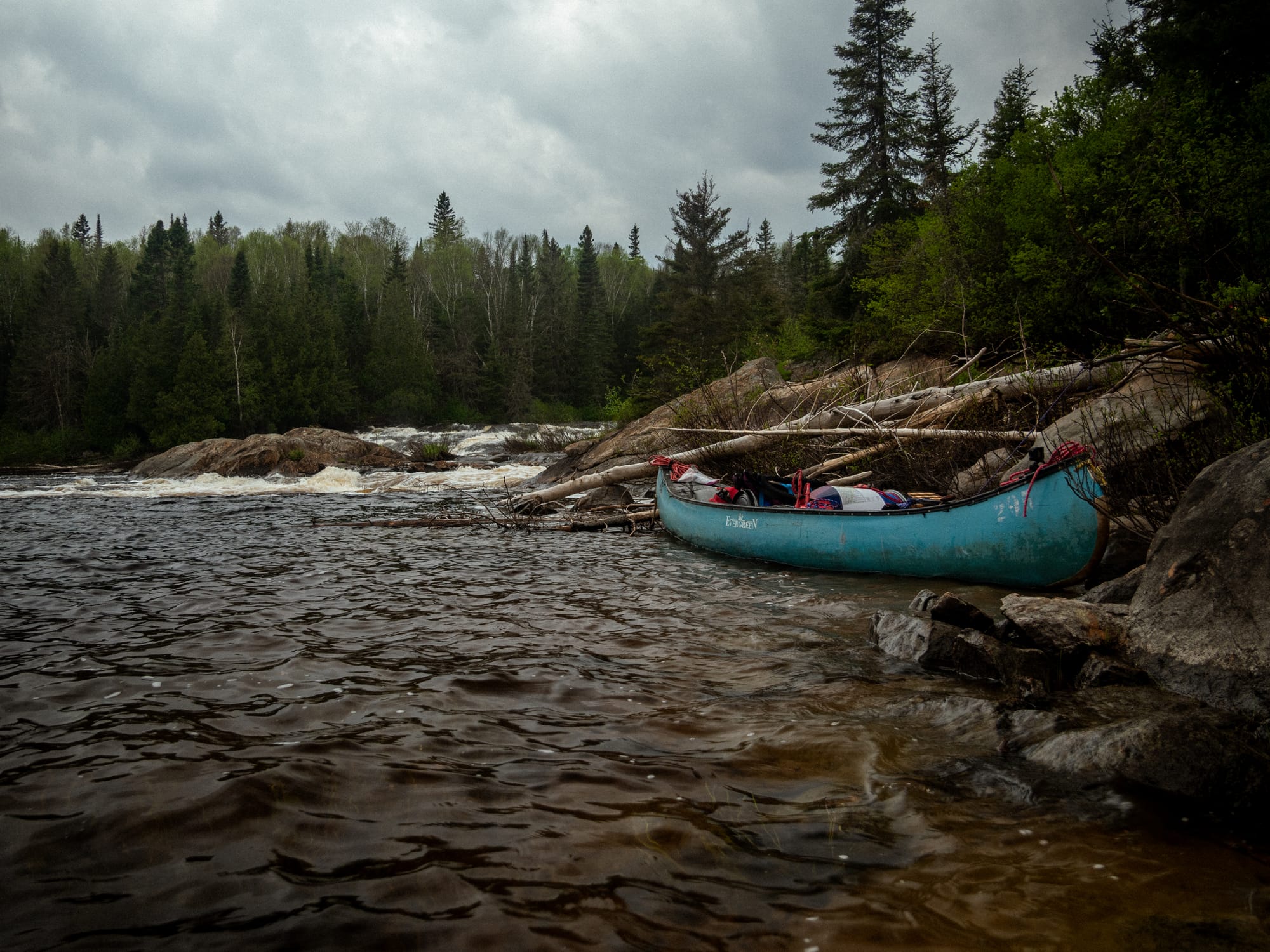
Our final night on the river, we made camp at a site I had used with my uncle on my first-ever three-day canoe trip. It was a full-circle moment, from learning the basics of canoe camping to, three years later, planning and leading my own seven-day trip.
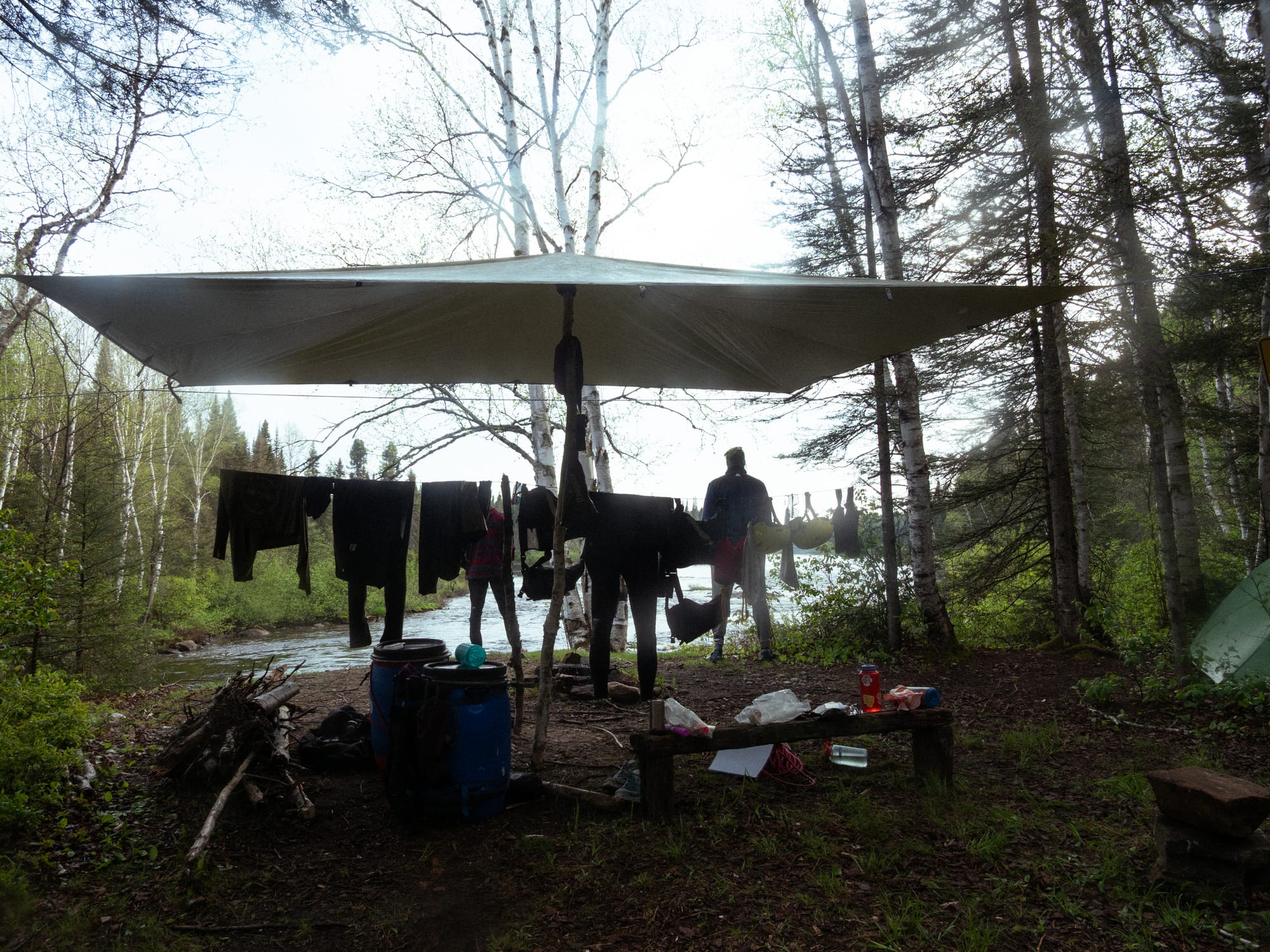
The rain was back, and the bugs emerged in full force, encouraged by the stand of birch trees around our camp.
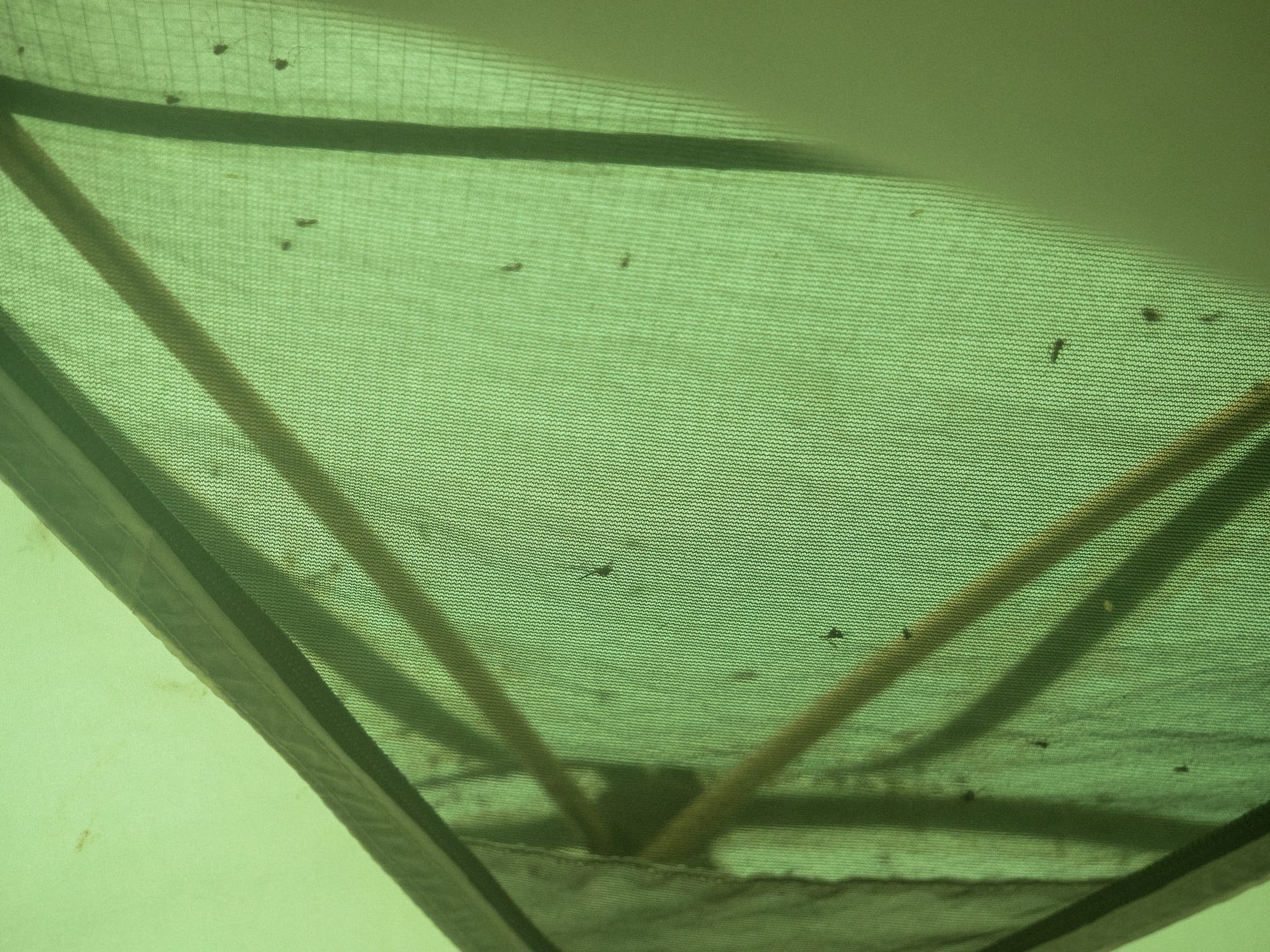
We pitched a tarp, and the mosquitoes — appreciating the reprieve from the rain — joined us under our shelter as we wrangled our bug nets and freeze-dried meal.
The Chochocouane had delivered, but the journey was not over yet.
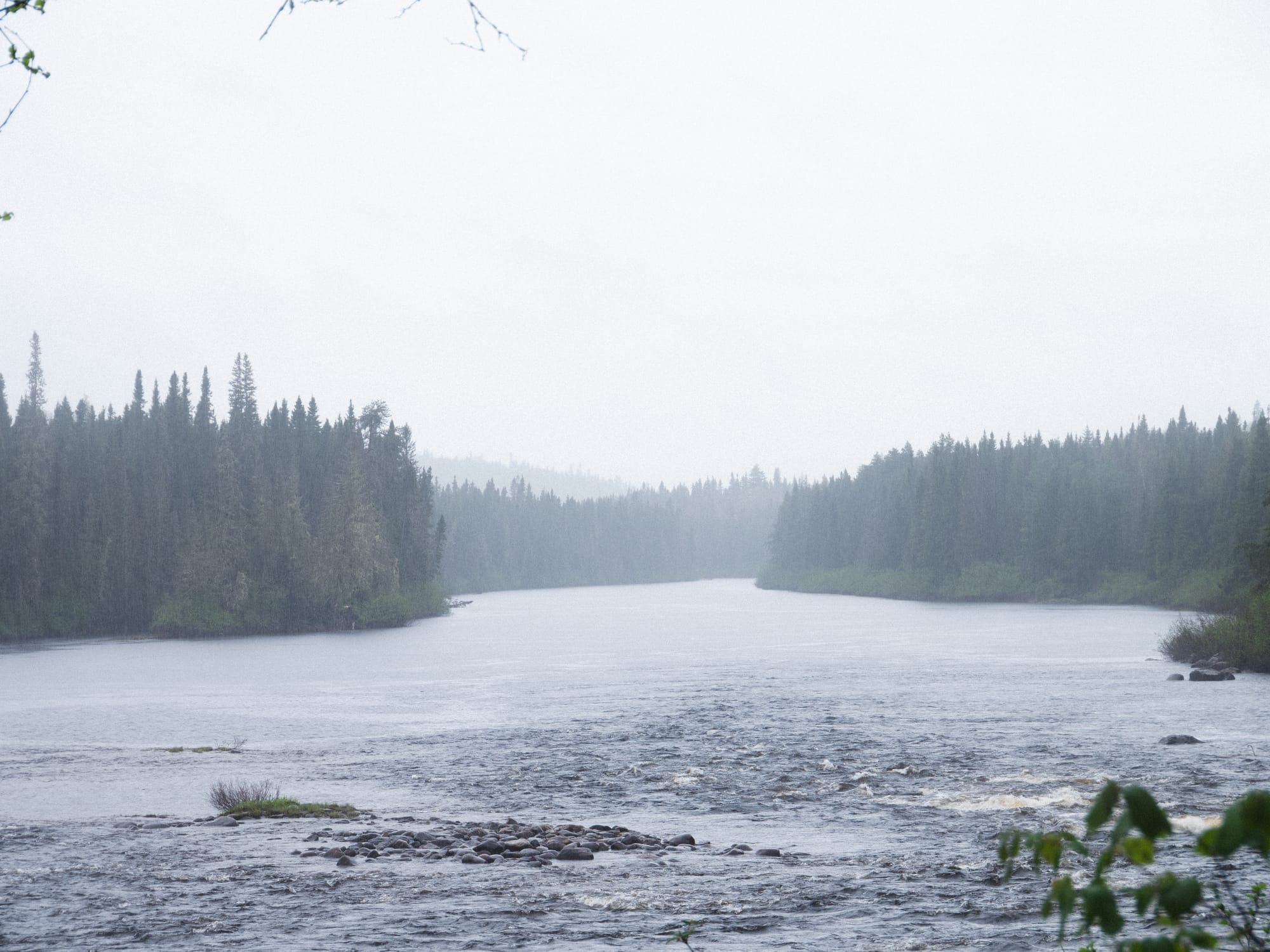
Next was upstream travel on another tributary, a section of the route where I had once overturned my canoe!
Our final paddle strokes on the Chochocouane left us with mixed feelings. It had been an adventure, and we had learned a lot.
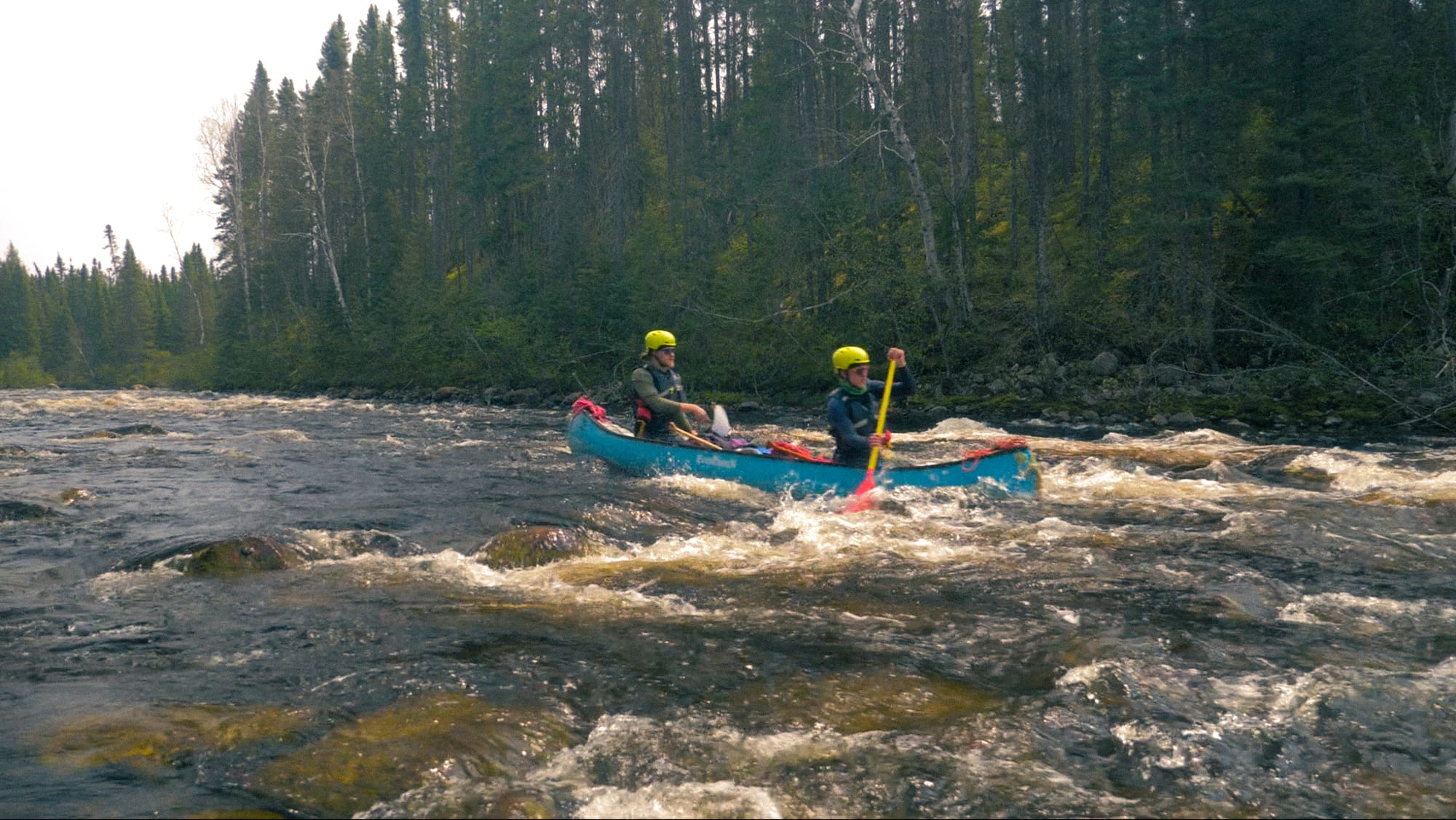
This was my third and longest trip exploring a section of the Chochocouane. It's a river that has become integral to my story, and that has marked some big chapters of life.
We saw the smaller tributary flowing into river right.
What remained was a section of upstream travel; a creek linking several smaller lakes.
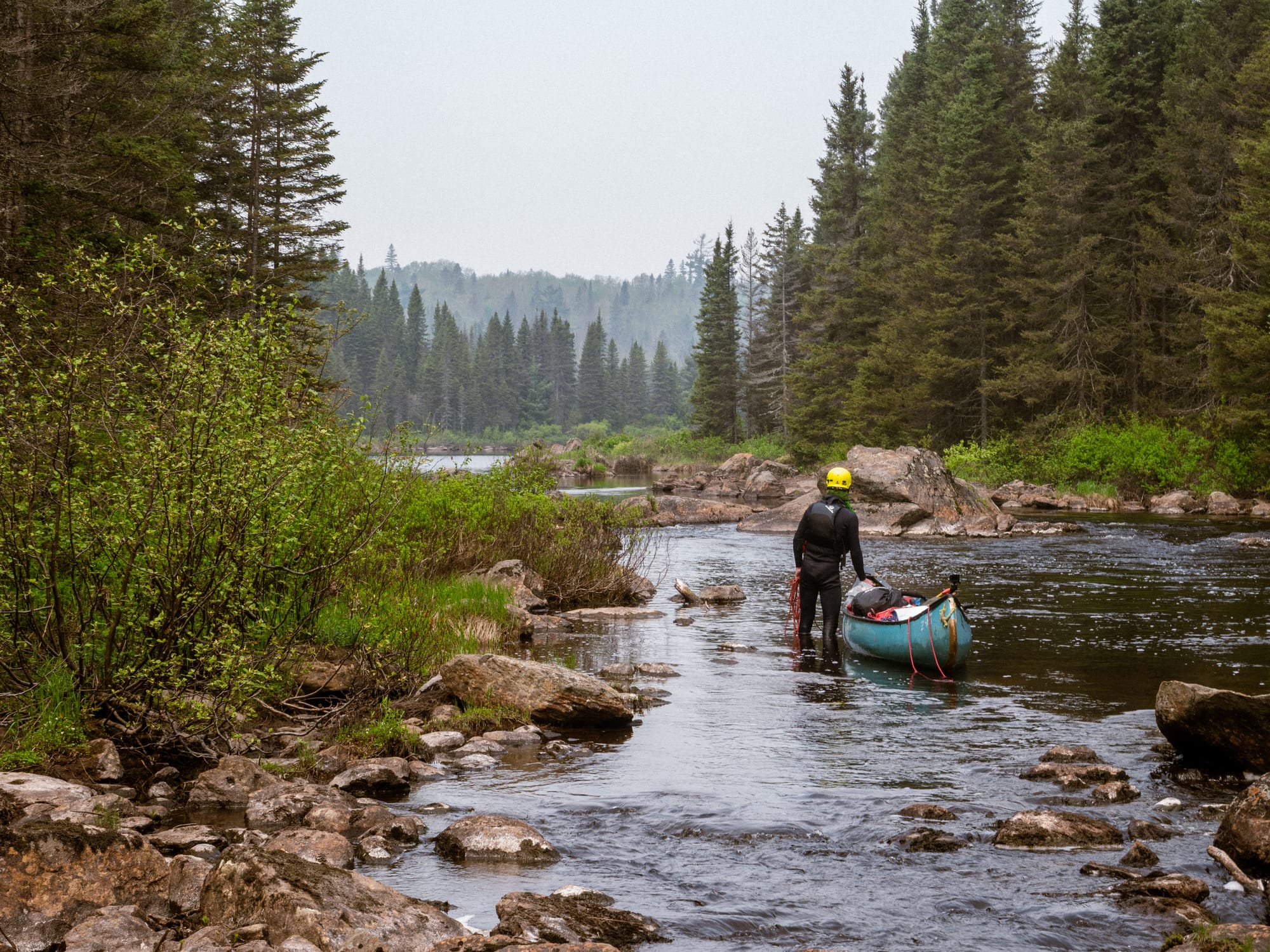
Often at the narrows — or before lakes — were small rapids. There was also some pretty strong current early on.
When necessary, we resorted to wading, even going up to our chests in water at one point. We also broke out the lines to track up one rapid. I was motivated to avoid as many of the portages as possible!
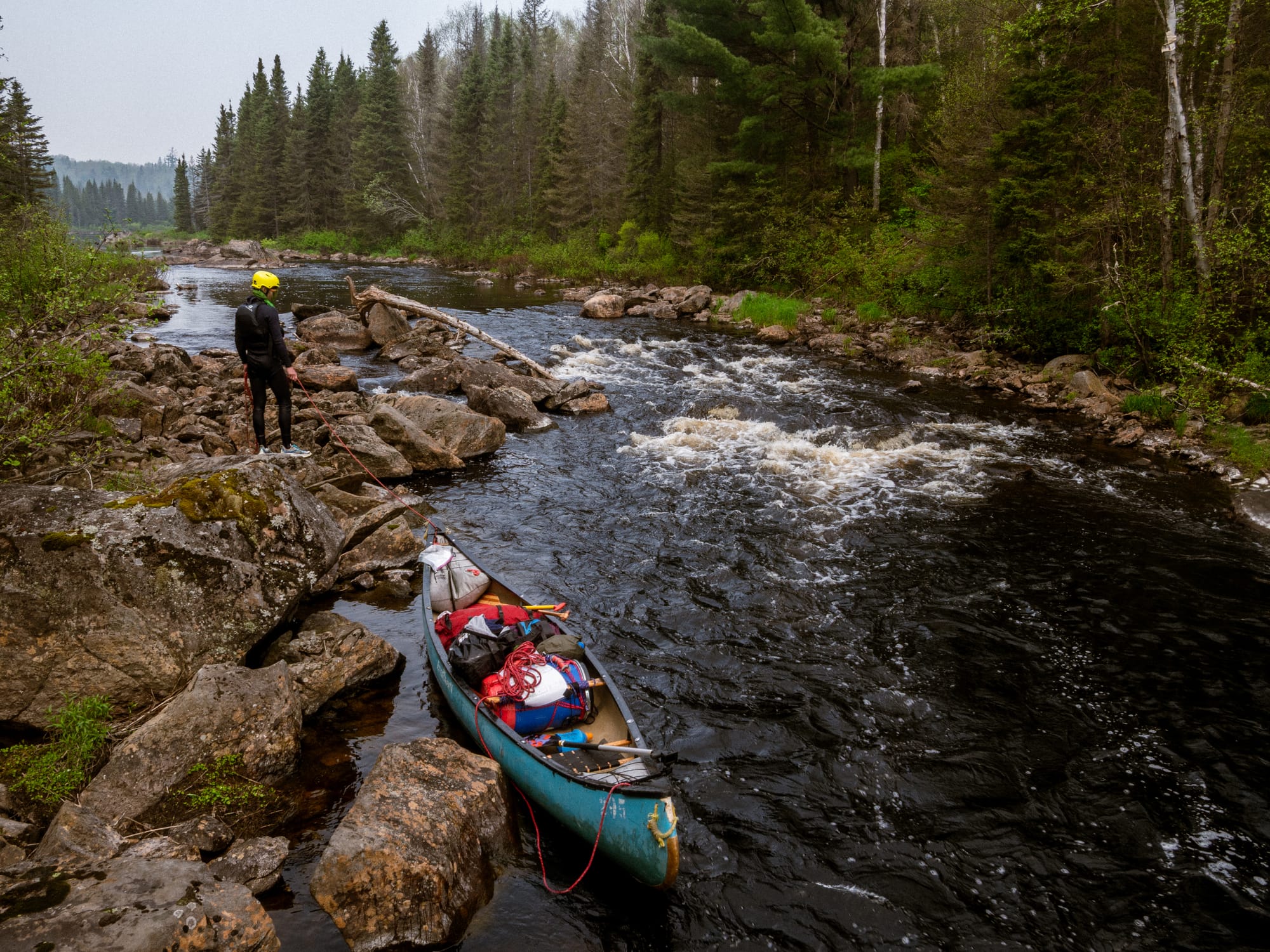
Fortunately, there was enough water to float the boat up these rapids for the most part.
We walked carefully in the water, avoiding getting our feet stuck between rocks in the strong current — a hazard that must be avoided.
Upstream travel took a lot of energy, but it was a lot smoother than when I had travelled this same section just the fall prior. My inexperience led to a capsize in the strong current, followed by a yard sale of gear floating downriver. I learned the hard way on this one.
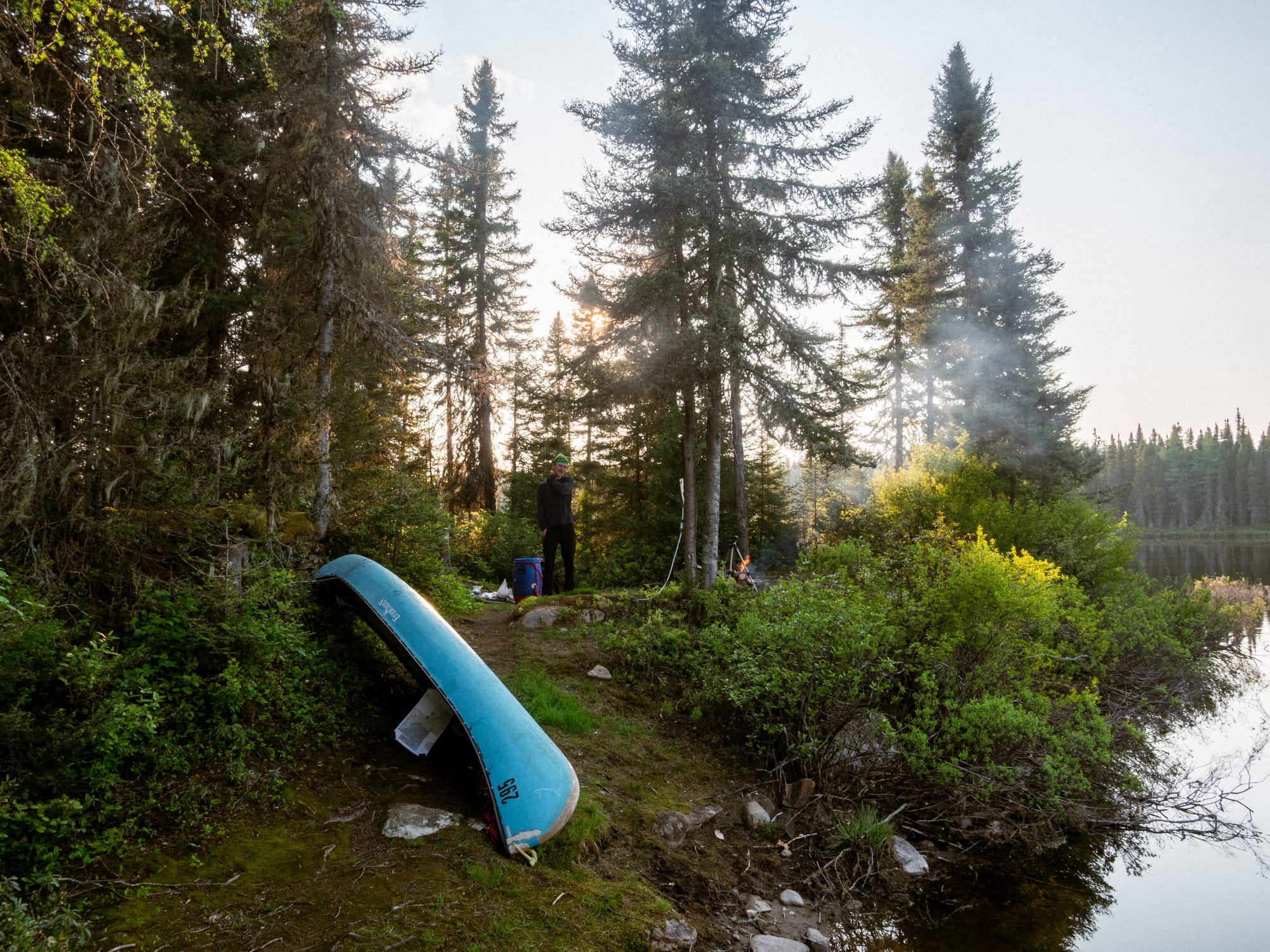
We made our final camp on an island — a camp I had stopped at for lunch twice before and had said I wanted to camp there eventually.
The tent pad wasn't particularly level or flat, and my blow-up sleeping pad had a leak. I was down to my corrugated foam sleeping mat.
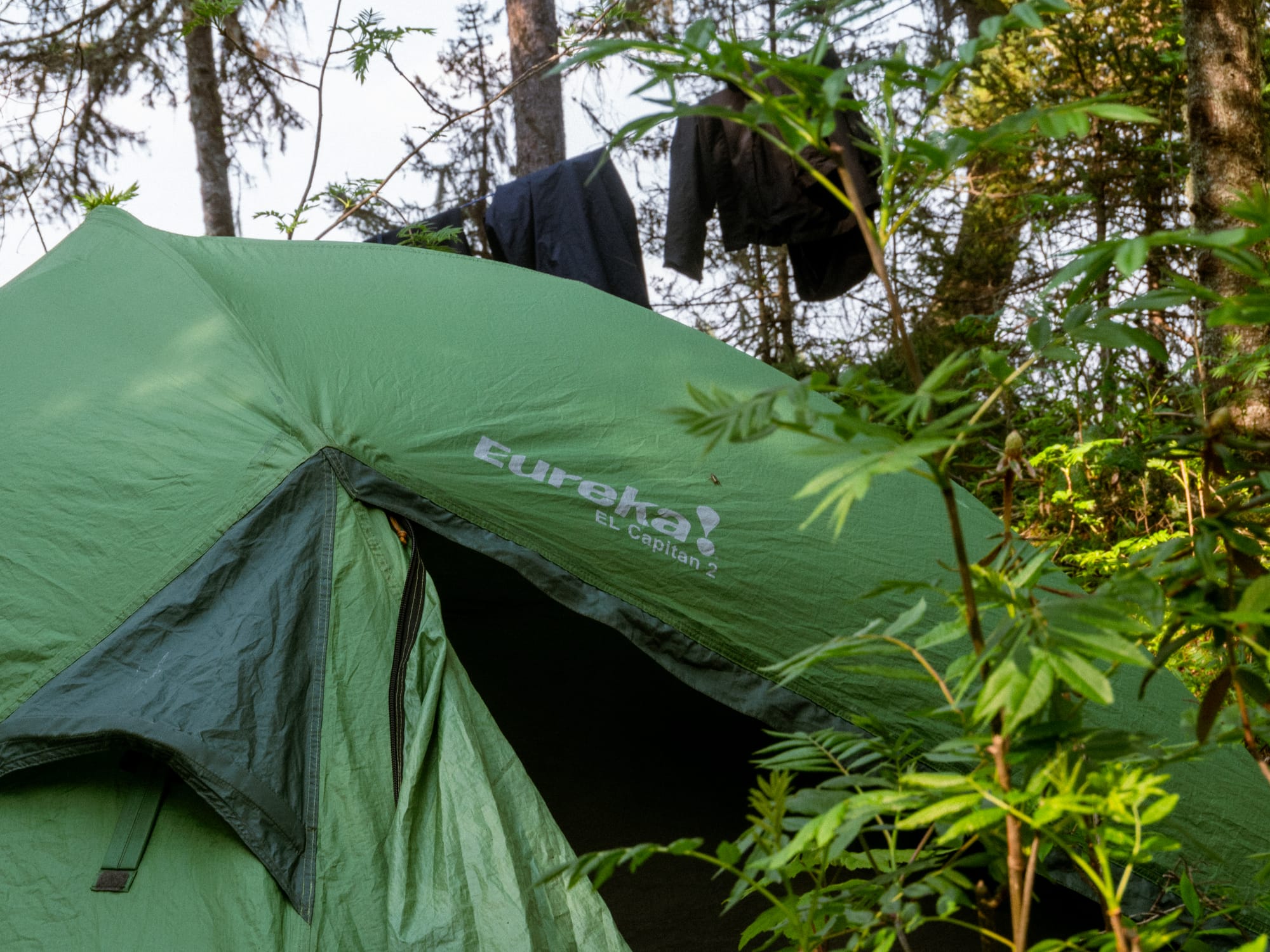
We enjoyed this last night at camp, reflecting on our journey. Highs and lows.
What was beginning to stand out in my mind was the contrast between certain days from the past week, each with its own challenges and/or rewards.
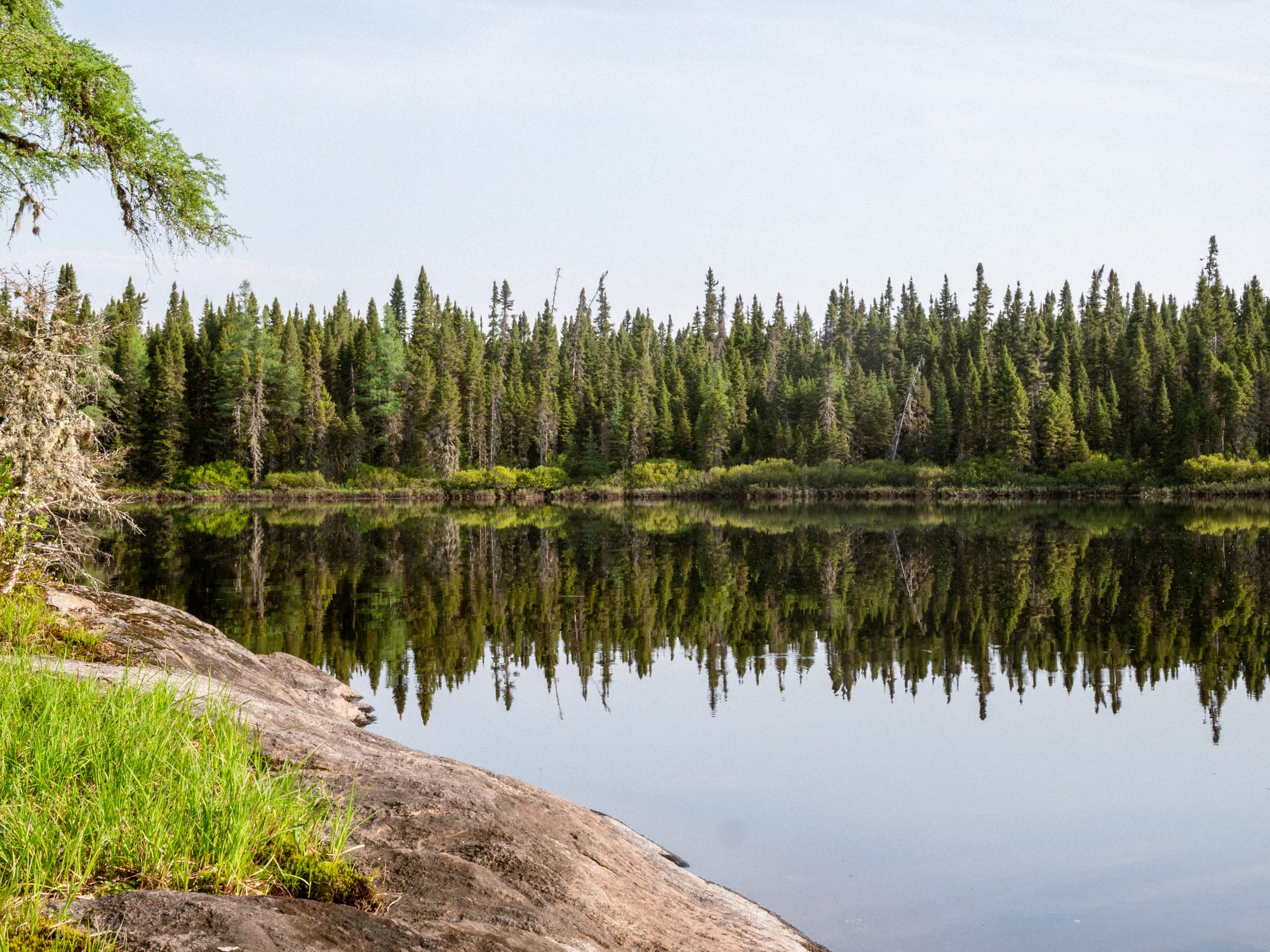
There is much to be learned in this contrast. It helps you see how you handle challenge, whether or not you are able to receive rest and gifts when they come, how you work with a team, and how you make decisions.
Our final morning was sunny. We didn't have far to go before linking back with the vehicle.
But there was one more surprise waiting for us on this trip.
As we paddled upstream, an animal came into view. It was a young moose!
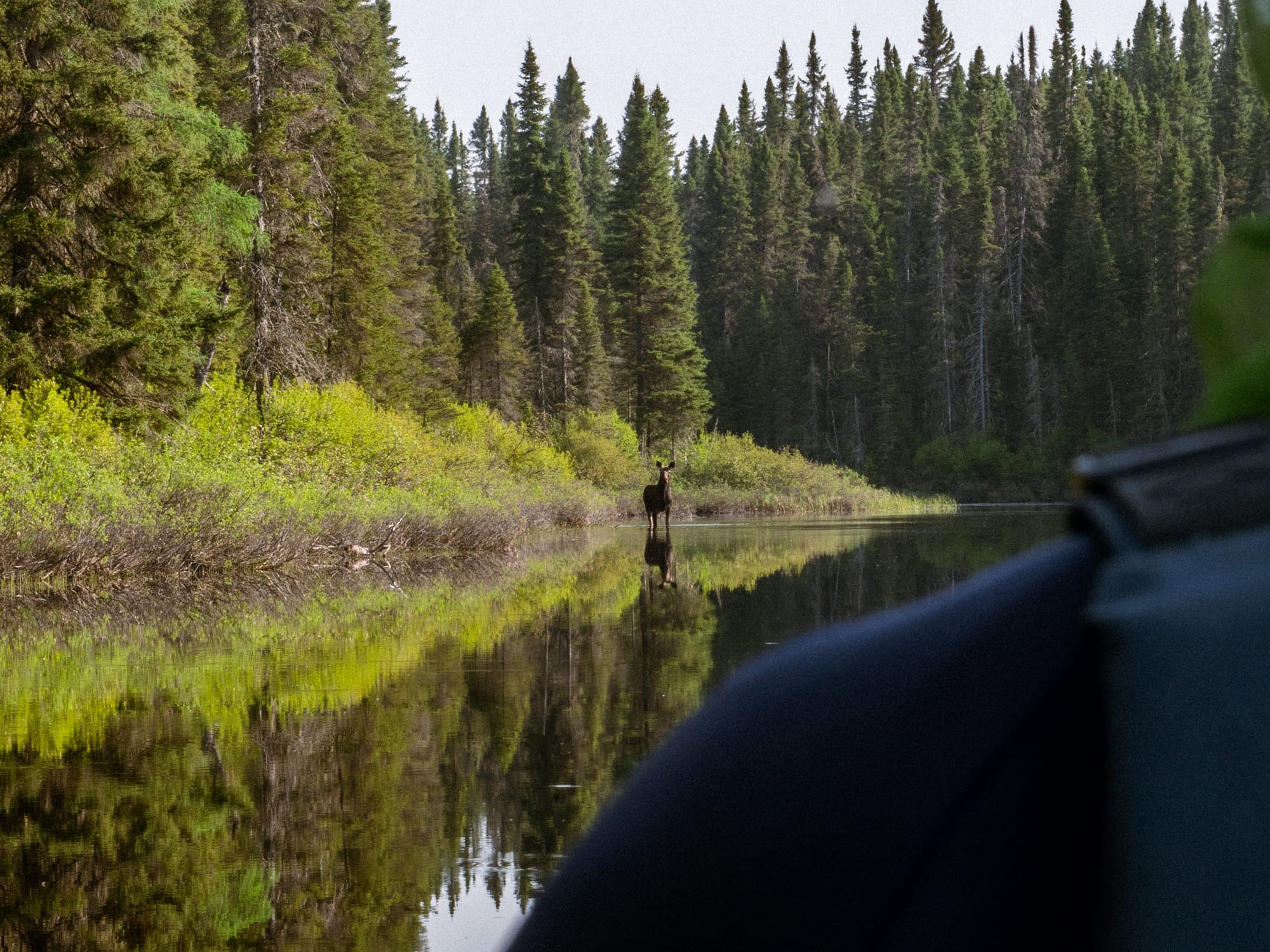
This was a very special memory. The light was golden, the scene was pure.
Before long, we were at the car, taking a team photo and making the long drive back to Montreal.
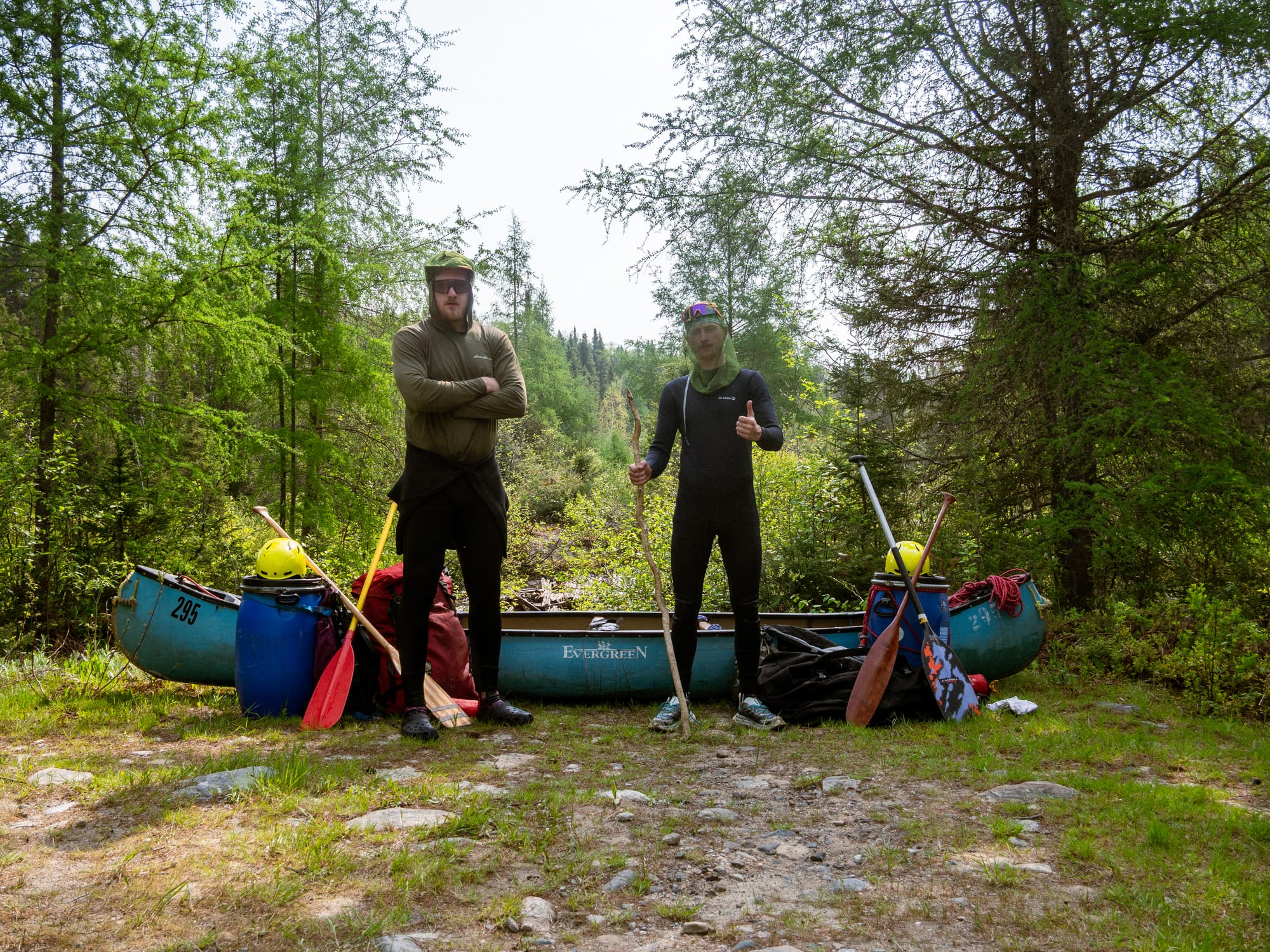
With us we took many new memories, and lessons facilitated by the truth that is just easier to see in the woods.